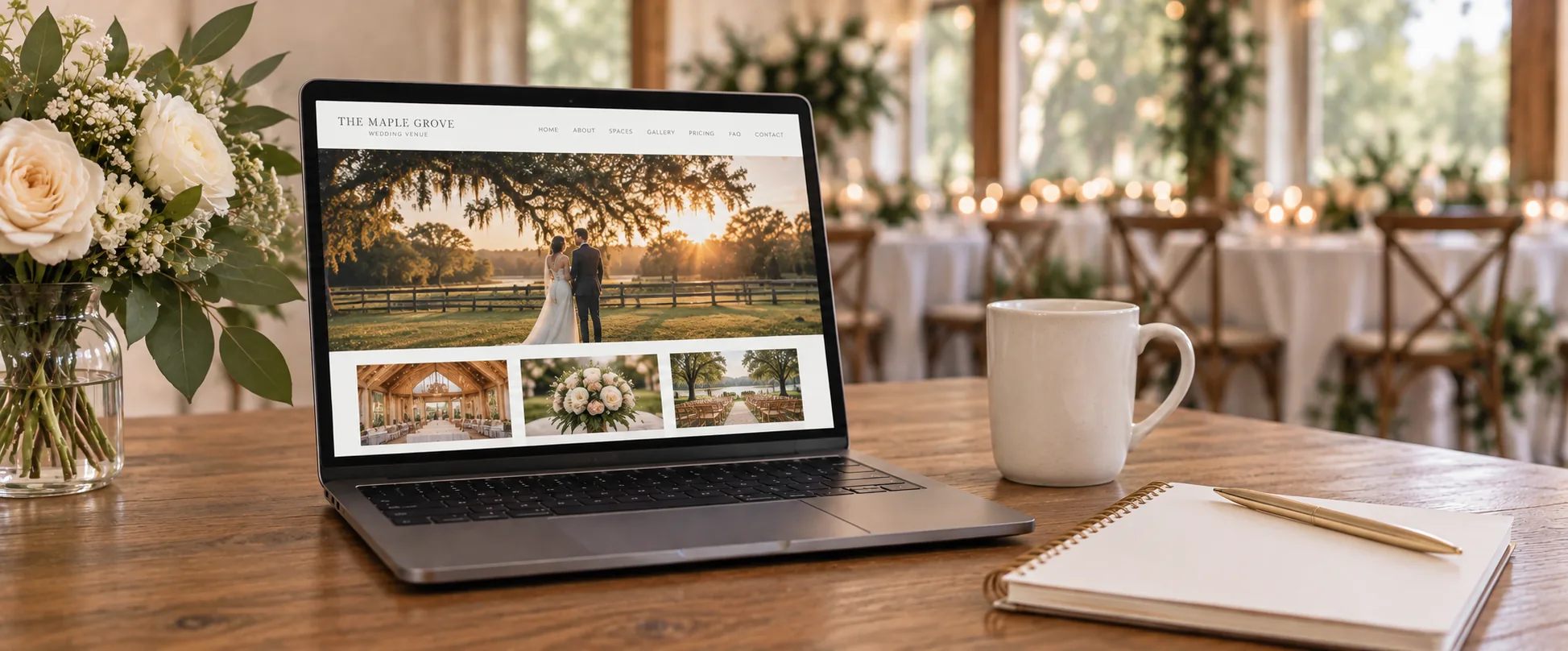
When you market your wedding venue, it is easy to focus almost entirely on the property itself. You show couples your ceremony space, reception area, bridal suite, outdoor spaces, décor options, and all the details that make your venue special.
Those things absolutely matter. But they are not the only things couples consider when choosing where to get married.
Your location matters too.
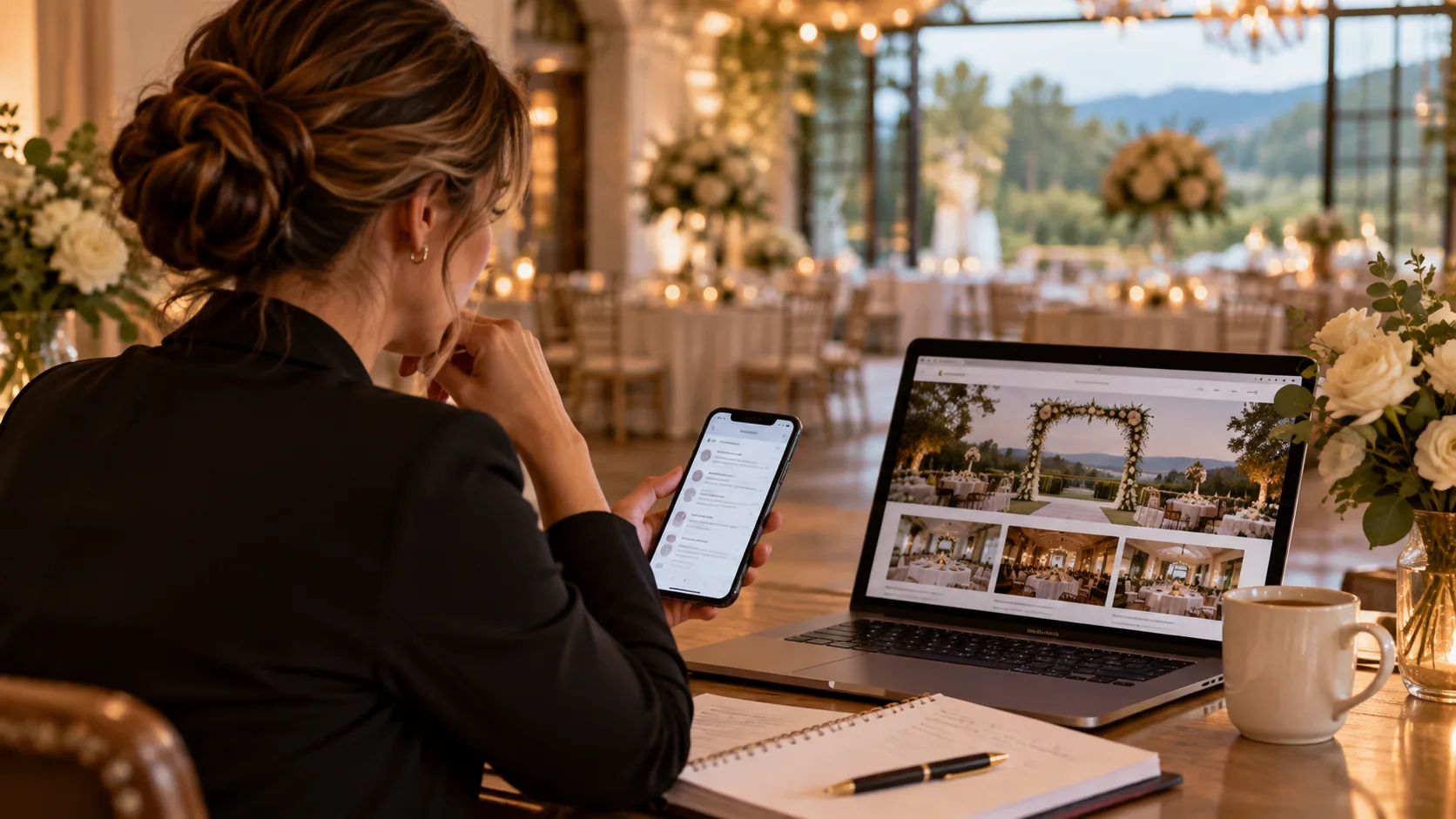
Couples want to know what the entire wedding experience will look like for them and their guests. They think about where everyone will stay, how far guests will need to travel, where the rehearsal dinner could take place, what there is to do nearby, and whether the area feels like somewhere they would enjoy spending an entire weekend.
If your website only sells the property and says very little about the surrounding area, you may be leaving out an important part of what makes your venue attractive.
Couples Are Choosing More Than a Wedding Venue
A wedding may take place at your venue for several hours, but for many couples and their guests, the experience lasts an entire weekend.
Guests may arrive on Friday, attend the wedding on Saturday, and leave Sunday morning. Some couples host welcome parties, rehearsal dinners, after-parties, brunches, or other activities throughout the weekend.
That means couples are not simply asking, “Do we like this venue?”
They are also asking questions such as:
-
Where will our guests stay?
-
Are there hotels nearby?
-
How far is the venue from the airport?
-
Are there restaurants close to the venue?
-
What can our guests do before or after the wedding?
-
Is the area easy for out-of-town guests to navigate?
-
Can we turn our wedding into a full weekend experience?
Your website should help answer those questions.
When you provide that information before a couple ever contacts you, you make it easier for them to picture their wedding at your venue.

Your Location Can Be a Selling Point
Every wedding venue has a location story to tell.
A rural venue may offer privacy, peaceful surroundings, beautiful scenery, and an escape from a busy city. A venue near a downtown area may offer restaurants, nightlife, hotels, and convenient transportation. A coastal venue can promote beaches and waterfront activities. A venue near a historic district may give couples and their guests plenty of places to explore during their stay.
The key is identifying what makes your location valuable to the couples you want to attract.
Instead of simply saying your venue is located in a particular city or town, explain why that location benefits the couple and their guests.
For example, if several hotels are located within 10 minutes of your venue, say so. If guests can spend the morning exploring a nearby downtown before attending the wedding, mention it. If your venue offers the peaceful atmosphere of the countryside while remaining 30 minutes from a major city, make that part of your message.
You are not distracting attention from your property. You are giving couples another reason to choose it.
Location Information Helps Out-of-Town Couples
Location becomes especially important when you want to attract couples who do not already know your area.
A local couple may understand that your venue sits 20 minutes from a popular downtown district or that several hotels are nearby. Someone searching from another city or state probably does not.
They only know what your website tells them.
If your website provides little information beyond an address, those couples have to research the area themselves. They may open Google Maps, search for hotels, look for nearby restaurants, calculate driving distances, and try to determine whether the location works for their guests.
Some will do the research. Others may simply move on to another venue that makes the decision easier.
Give them the information they need directly on your website.
Explain how close you are to major cities, airports, hotels, popular attractions, beaches, downtown areas, or other recognizable destinations. Help someone who has never visited your area understand exactly what staying there for a wedding weekend could look like.
Promote Nearby Hotels and Accommodations
Guest accommodations are one of the biggest location questions couples face.
If you regularly recommend nearby hotels, resorts, vacation rentals, or other lodging options during tours, consider providing some of that information on your website as well.
You do not necessarily need to provide an exhaustive list. Instead, highlight a few useful options or explain where guests typically stay.
You could mention:
-
Nearby hotels and resorts
-
Approximate driving times from popular lodging areas
-
Hotels that offer room blocks
-
Transportation or shuttle considerationsNearby vacation rental areas
-
Accommodations for different budgets
This type of information can be especially valuable for venues that attract destination weddings or couples with large numbers of out-of-town guests.
It also helps couples solve another piece of their wedding planning puzzle while they are already considering your venue.

Show Couples What Their Guests Can Do Nearby
Couples often think about the guest experience when planning their weddings.
If guests are traveling several hours or flying across the country, couples may want them to enjoy more than the ceremony and reception.
Your surrounding area can help create that experience.
Think about what wedding guests could realistically do while staying near your venue. Depending on your location, that might include beaches, restaurants, breweries, wineries, shopping districts, golf courses, parks, historic attractions, museums, nightlife, or outdoor activities.
You do not need to turn your wedding venue website into a tourism website. A carefully selected list of nearby activities can be enough.
The goal is to help couples imagine their guests arriving for the weekend and having things to see and do without traveling long distances.
That can make your venue feel like a destination even when it is only a short drive from home.

Your Location Can Help You Stand Out From Competing Venues
Couples often compare several venues that appear similar online.
Two venues may offer beautiful ceremony spaces, reception areas, getting-ready suites, outdoor photo locations, and comparable guest capacities. When the properties themselves check many of the same boxes, other factors can influence the decision.
Location can become one of those factors.
One venue may be closer to hotels. Another may offer easier airport access. Another may sit near a popular vacation destination. Another may provide a secluded setting while still keeping guests close to restaurants and accommodations.
Those differences matter.
If you never explain them on your website, couples may not realize that your location gives them an advantage.
Do not assume visitors already understand your area. Tell them why your location works well for weddings.
Location Content Can Also Help With Local SEO
Promoting your location is not only helpful for couples. It can also strengthen your wedding venue’s local search presence.
Couples do not always search for a venue using the exact city where the property is located. They may search for wedding venues near a larger nearby city, within a particular region, near the beach, or within driving distance of another destination.
Your website content gives search engines context about where your venue is located and the areas it serves.
For example, a venue outside a major city may have legitimate reasons to discuss its proximity to that city, nearby communities, airports, hotels, and regional attractions.
That creates opportunities to naturally include geographic information throughout your website without stuffing city names into every paragraph.
You can also create useful location-focused content around the places couples actually search for when planning their weddings.
The important part is making that content genuinely helpful. Do not create dozens of nearly identical pages that simply swap one city name for another. Give couples real information about why your venue works for someone planning a wedding in or near that area.
Create a Dedicated Location Page
If location plays an important role in your venue’s appeal, consider creating a dedicated page about it.
A strong location page can explain where your venue is, how guests typically reach it, and what surrounds it.
You can include nearby hotels, airports, restaurants, attractions, downtown areas, beaches, parks, or other destinations that matter to wedding guests.
You can also include approximate drive times from important locations.
For example, a venue might highlight that it sits just 15 minutes from downtown, 30 minutes from the nearest major airport, and 10 minutes from an area with several hotels.
This makes important information easy to find while giving search engines a stronger understanding of your venue’s geographic relevance.
You can then link to the location page from other parts of your website, including your homepage, FAQ page, wedding information pages, and contact or tour page.
Use Your Blog to Sell the Area Too
Your blog gives you even more opportunities to promote your location without cluttering your main venue pages.
Instead of publishing only general wedding planning articles, create content that connects your venue to the surrounding area.
Potential topics could include:
-
Where Wedding Guests Can Stay Near Your Venue
-
Things Wedding Guests Can Do During a Weekend in Your Area
-
Planning a Destination Wedding in Your City
-
Best Rehearsal Dinner Areas Near Your Venue
-
A Wedding Weekend Guide for Out-of-Town Guests
-
Why Couples Choose Your Region for Their Wedding
-
How Far Your Venue Is From Nearby Airports and Major Cities
These articles provide useful information while giving you additional opportunities to appear in location-based searches.
They can also become resources your sales team sends to couples after an inquiry or tour.
Use Photos to Show More Than the Property
Your photography should support the story you are telling.
Professional images of your venue should remain the priority, but you can also incorporate images that give couples a sense of the surrounding area.
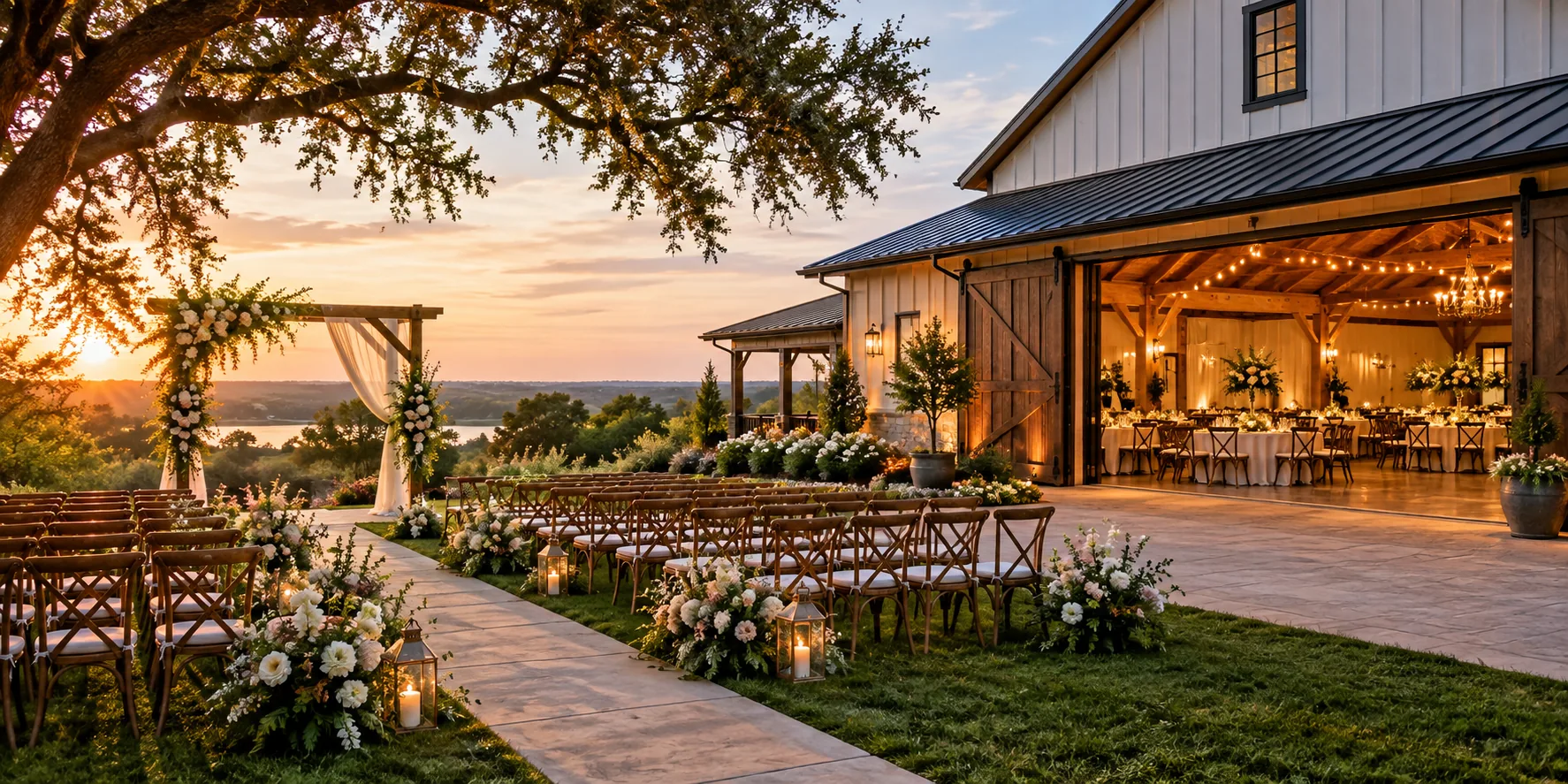
If your venue sits near the coast, show the coastline. If you are near a charming downtown district, include it. If the drive to your venue includes beautiful countryside, show couples what makes the setting special.
This is particularly useful when your location contributes to the atmosphere couples experience when they visit.
A couple should be able to look through your website and understand not only what your venue looks like, but also what it feels like to spend their wedding weekend there.
Make Location Part of Your Sales Process
Your location should not disappear from the conversation once a couple submits an inquiry.
If couples frequently ask the same location-related questions during tours, use those questions to improve both your website and your sales process.
Talk about nearby hotels. Explain where guests usually stay. Mention how long it takes to reach the venue from the airport. Recommend areas for rehearsal dinners. Point out attractions guests may enjoy.
This information can remove objections before they become reasons not to book.
It also positions your venue as a helpful local resource instead of simply a property available for rent.
You know your area better than most couples considering it for their wedding. Use that knowledge to make planning feel easier.

Sell the Entire Wedding Experience
Your ceremony space may get a couple’s attention. Your reception space may impress them during a tour. Your amenities, pricing, and service may ultimately help close the booking.
But the location surrounding your venue is part of the experience too.
Couples are trying to picture what their wedding will feel like from the moment their guests arrive until everyone heads home.
Show them.
Tell them where guests can stay. Explain what makes your area special. Highlight nearby attractions. Talk about convenient transportation. Show how close you are to important destinations.
When your website helps couples picture the entire wedding weekend instead of only the hours they will spend on your property, you give them more reasons to imagine their wedding taking place with you.
And the easier you make it for couples to picture that experience, the easier you make it for them to take the next step and schedule a tour.
Frequently Asked Questions About Promoting Your Wedding Venue's Location
1. Why is location important when marketing your wedding venue?
Your wedding venue’s location plays an important role in attracting couples because they are choosing more than a beautiful place to hold their ceremony and reception. They are also considering how convenient the location will be for their guests, where everyone will stay, and what the surrounding area has to offer.
When you promote your location alongside your property, you give couples more reasons to consider booking with you. If your venue is near popular attractions, hotels, restaurants, or a major city, those advantages can make your property more appealing, especially to couples planning weddings with out-of-town guests.
Think about what makes your location special and how those benefits can improve the wedding experience. Whether your venue offers peaceful countryside surroundings, easy access to downtown entertainment, or proximity to a popular vacation destination, make sure your website communicates those advantages.
The more you help couples understand the benefits of your location, the easier you make it for them to picture their wedding at your venue.
2. How can you use local SEO to attract more couples to your wedding venue?
You can improve your wedding venue’s local SEO by creating website content that connects your property to the cities, communities, and popular destinations surrounding it. This helps search engines understand where your venue is located and which geographic searches are relevant to your business.
Start by making sure your website clearly identifies your venue’s city and state. Include location information naturally in your page titles, headings, meta descriptions, and website content. You should also maintain an accurate Google Business Profile and keep your business name, address, and phone number consistent across relevant online directories.
If your venue is located outside a major city, consider creating a dedicated page explaining why couples searching for wedding venues near that city should consider your property. Include useful information such as driving distances, nearby hotels, local attractions, and transportation options.
Avoid simply repeating city names throughout your website. Instead, focus on answering the questions couples actually have about your location.
When you provide detailed, helpful geographic information, you strengthen your website’s local relevance while making it easier for couples to discover and evaluate your venue.
What location information should you include on your wedding venue website?
Your wedding venue website should provide enough location information for couples to understand where your property is, how easily their guests can reach it, and what the surrounding area offers.
Start with your complete address, an interactive map, and directions from major highways or nearby cities. You should also include approximate driving times from airports, popular hotel areas, and recognizable local destinations.
If your venue is near beaches, historic districts, restaurants, shopping, or other attractions, explain why those locations might appeal to couples and their guests.
Do not overlook practical details such as parking availability, shuttle transportation options, or whether guests will need a rental car.
Consider creating a dedicated location page where couples can find all this information in one place. You can also link to that page from your homepage, FAQ section, and other important areas of your website.
By answering these questions upfront, you reduce the amount of research couples need to do and make your venue easier to consider.
Can promoting nearby attractions help you book more weddings?
Yes. Promoting nearby attractions can help you attract more couples and potentially increase wedding bookings by showing them what their guests can enjoy beyond the ceremony and reception.
Think about the couples who contact your venue from another city or state. Their guests may travel several hours or even fly across the country to attend the wedding. Those couples often want their guests to enjoy the entire trip, not just the wedding itself.
If your venue is near beaches, restaurants, shopping districts, golf courses, historic attractions, or other popular destinations, make those advantages part of your marketing.
For example, instead of simply mentioning that your venue is near a historic downtown district, explain how guests can spend the weekend exploring local restaurants, shops, and attractions.
You do not need to promote every business in your area. Focus on the attractions that genuinely improve the guest experience and make your location more appealing.
When couples can picture an enjoyable wedding weekend for themselves and their guests, your venue becomes more than just another property on their list.
How can your wedding venue attract more destination weddings?
Your wedding venue can attract more destination weddings by marketing both your property and the surrounding location. Couples planning a destination wedding want to know what makes your area special, how easily their guests can travel there, and what everyone can enjoy during their stay.
Start by highlighting the features that make your location worth visiting. If your venue is near beaches, historic attractions, scenic countryside, or popular vacation destinations, make those benefits a visible part of your website.
You should also provide helpful travel information, including nearby airports, hotel recommendations, driving distances, and local transportation options. Remember that couples planning from another state may know very little about your area.
Consider creating blog posts that help couples plan a wedding weekend in your region. You can cover nearby accommodations, rehearsal dinner locations, local activities, and travel tips for out-of-town guests.
Professional photography of your venue and surrounding area can also help couples picture what their wedding weekend could look like.
The goal is to make your venue and its location feel like a complete destination wedding experience, not simply a property couples would need to travel to.
Should you create separate wedding venue pages for nearby cities?
Creating dedicated pages for nearby cities can help your wedding venue reach more couples through local search, but only when those pages provide meaningful information about your property and its relationship to each location.
For example, if your venue is located 25 minutes outside a major city, you may want to create a page explaining why couples searching for wedding venues near that city should consider your property.
Include details that matter to those couples, such as driving distances, nearby accommodations, transportation options, and the advantages of choosing your venue over a location directly within the city.
However, avoid creating dozens of nearly identical pages where you simply replace one city name with another. That approach does little to help couples and can create low-value content that search engines may choose not to rank.
Instead, focus on the cities and surrounding communities that genuinely contribute to your wedding inquiries.
A few well-written, informative location pages can give your website a stronger foundation for attracting couples searching in those areas.
How can you optimize your wedding venue website for AI and voice search?
You can make your wedding venue website more useful for AI-powered search and voice assistants by providing clear, detailed answers to the questions couples naturally ask when searching for wedding venues.
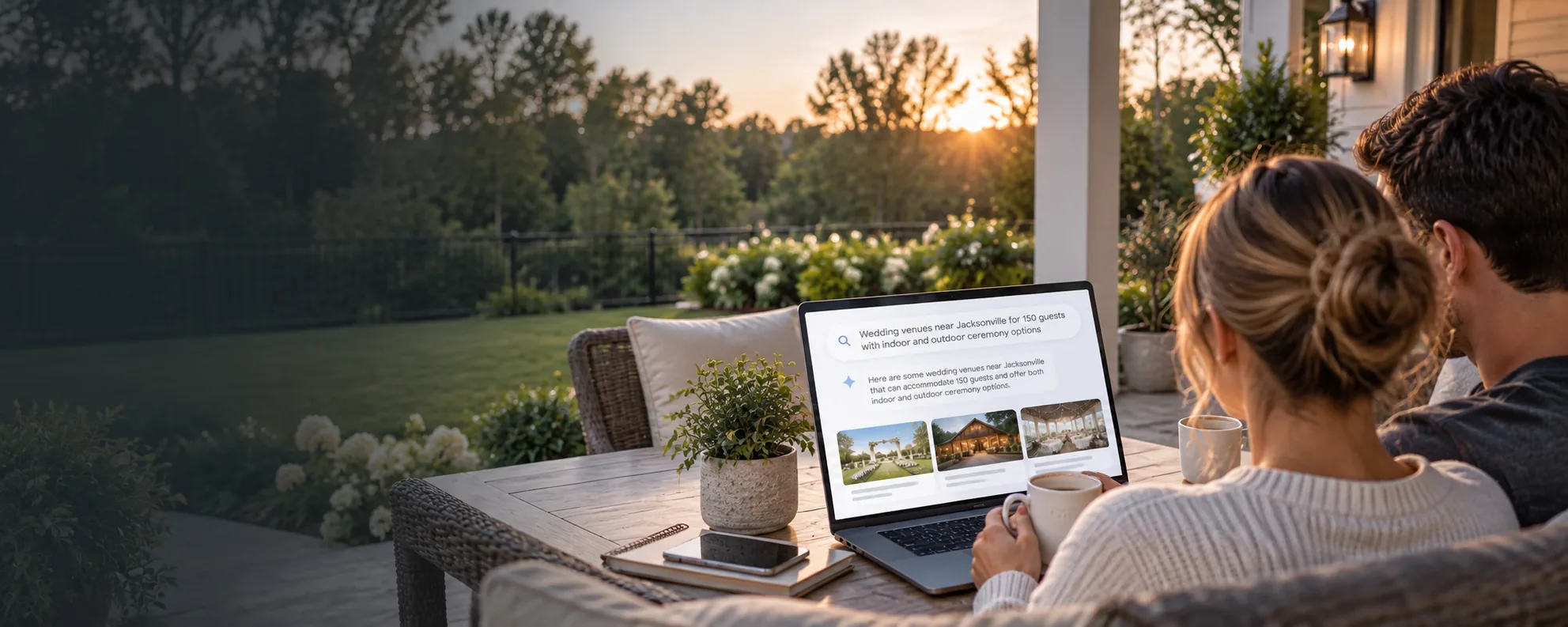
Think about how someone might search using ChatGPT, Google AI search features, or a voice assistant. Instead of typing a short phrase such as “wedding venues near Jacksonville,” they might ask, “What outdoor wedding venues near Jacksonville have hotels nearby?” or “Where can I find a countryside wedding venue within 30 minutes of the city?”
Your website should provide the information needed to answer those questions.
Include accurate details about your location, ceremony and reception spaces, guest capacity, nearby accommodations, parking, travel distances, and other important venue features.
You should also organize your content using descriptive headings and FAQ sections that answer common questions in natural, conversational language.
Make sure your Google Business Profile and relevant wedding directory listings include consistent business information.
While no website can guarantee placement in AI-generated answers or voice search results, providing accurate, well-organized information gives these systems more useful content to understand and potentially reference when couples search for venues like yours.
How can you use nearby hotels to generate more wedding venue inquiries?
You can use nearby hotels and accommodations as a selling point by showing couples how convenient your venue will be for their out-of-town guests.
One of the biggest concerns couples face when planning a wedding is figuring out where everyone will stay. If your venue is close to several hotels, resorts, or vacation rental areas, make sure that information is easy to find on your website.
Consider creating a section that highlights popular accommodation options and includes approximate driving times from your venue. If local hotels offer wedding room blocks or group rates, you can mention those opportunities and encourage couples to contact the hotels for current availability.
You should also explain whether shuttle services are available in your area or whether guests typically drive between their hotels and your property.
If your venue is in a rural location, this information becomes even more important because couples may not know where the closest accommodations are located.
By helping couples understand their lodging options before they contact you, you remove another potential obstacle from their planning process and give them more confidence in your venue’s location.
What types of location-based blog posts should you publish on your wedding venue website?
You should publish location-based blog posts that answer the questions couples have about getting married in your area. These articles can help attract visitors through search engines while introducing couples to the benefits of your venue’s location.
Think about the questions your team hears during tours and inquiry conversations. Do couples frequently ask where guests should stay? Are they interested in nearby restaurants for rehearsal dinners? Do they want recommendations for activities during their wedding weekend?
Those questions are excellent starting points for blog content.
For example, you could write about planning a wedding weekend in your city, nearby hotels for wedding guests, popular rehearsal dinner areas, or things out-of-town guests can do while visiting.
You can also create articles explaining the advantages of getting married in your region, especially if your venue attracts couples from nearby metropolitan areas.
Make sure each article provides genuinely useful information rather than simply promoting your property. Include accurate local details and naturally link to relevant pages on your website.
This approach gives you opportunities to reach couples earlier in their planning process, strengthen your local SEO, and build awareness of your venue before they begin scheduling tours.
What is the best way to promote your wedding venue's location to increase bookings?
The best way to promote your wedding venue’s location is to make it part of the overall experience you are selling to couples, rather than treating it as nothing more than an address on your website.
Start by identifying the location advantages that matter most to your ideal couples. Your venue might offer convenient access to hotels and airports, beautiful countryside surroundings, nearby beaches, popular attractions, or proximity to a major city.
Once you identify those advantages, incorporate them throughout your website and marketing.
Highlight important location benefits on your homepage, create a dedicated location page, publish helpful local blog content, and include relevant geographic information in your SEO strategy.
You should also make location part of your inquiry and tour conversations. If couples regularly ask about nearby accommodations, travel distances, or things their guests can do, start providing that information before they have to ask.
Most importantly, explain the benefit behind each location feature.
Instead of simply stating that your venue is 20 minutes from downtown, explain how that gives wedding guests convenient access to hotels, restaurants, shopping, and entertainment while allowing the couple to celebrate in a more private setting.
When you show couples the value of both your property and its surrounding location, you give them more reasons to choose your venue, schedule a tour, and ultimately book their wedding with you.
Final Thoughts: Turn More Wedding Venue Inquiries Into Bookings With Dual Spark Marketing
At Dual Spark Marketing, we specialize in helping wedding venues attract more qualified couples through effective digital marketing strategies.
But we also understand that generating inquiries is only part of the equation.
Your website needs to make it easy for couples to find information, understand what makes your venue special, and take the next step toward scheduling a tour.
From wedding venue website design and search engine optimization to Google Ads and conversion-focused improvements, we help venues build a stronger online presence that supports their booking goals.
If your wedding venue is generating inquiries but struggling to turn them into scheduled tours and confirmed weddings, it might be time to take a closer look at your digital marketing and inquiry process.
Contact Dual Spark Marketing to learn how we can help your wedding venue attract more qualified inquiries and create more opportunities to turn interested couples into booked weddings.