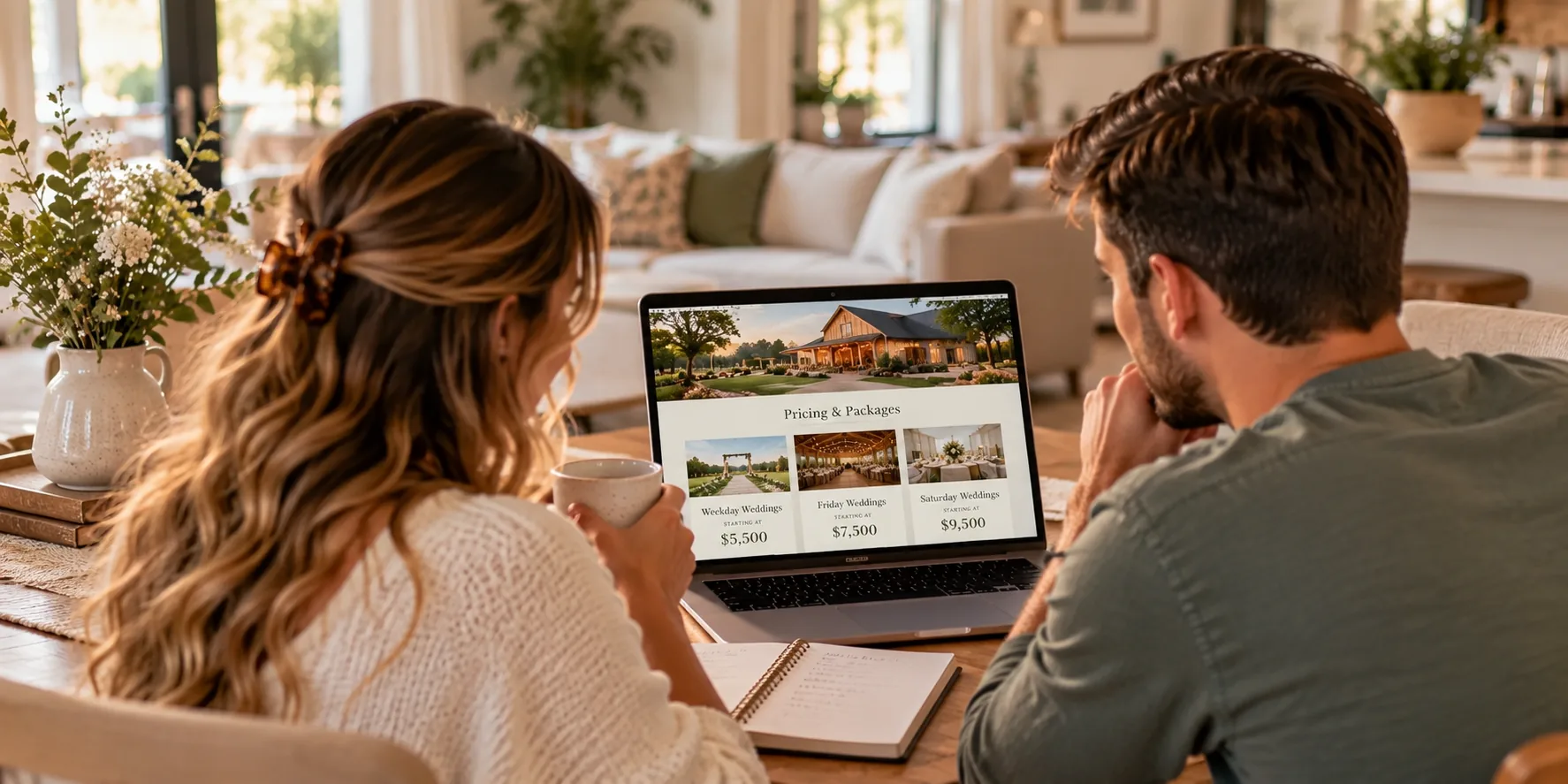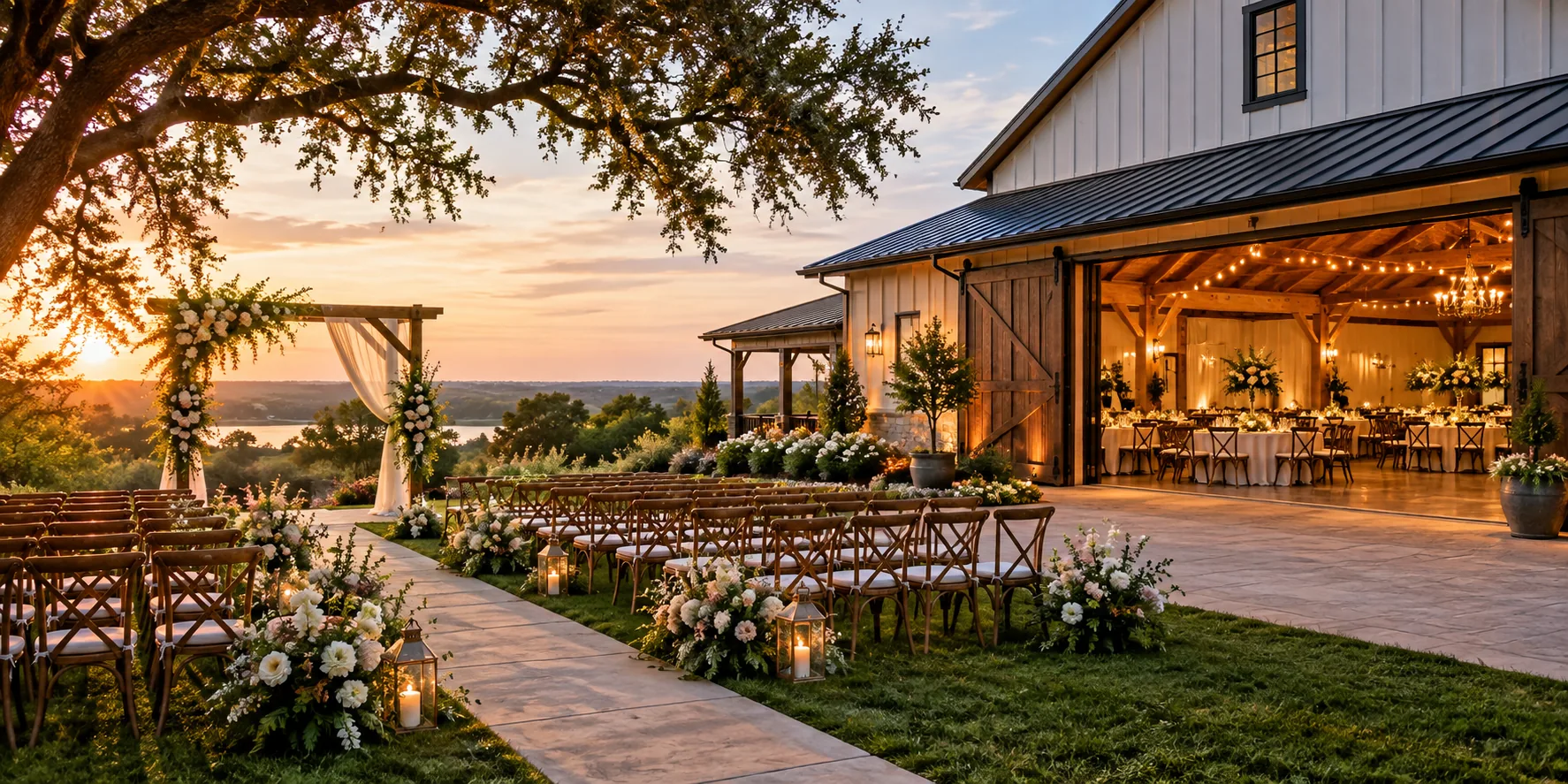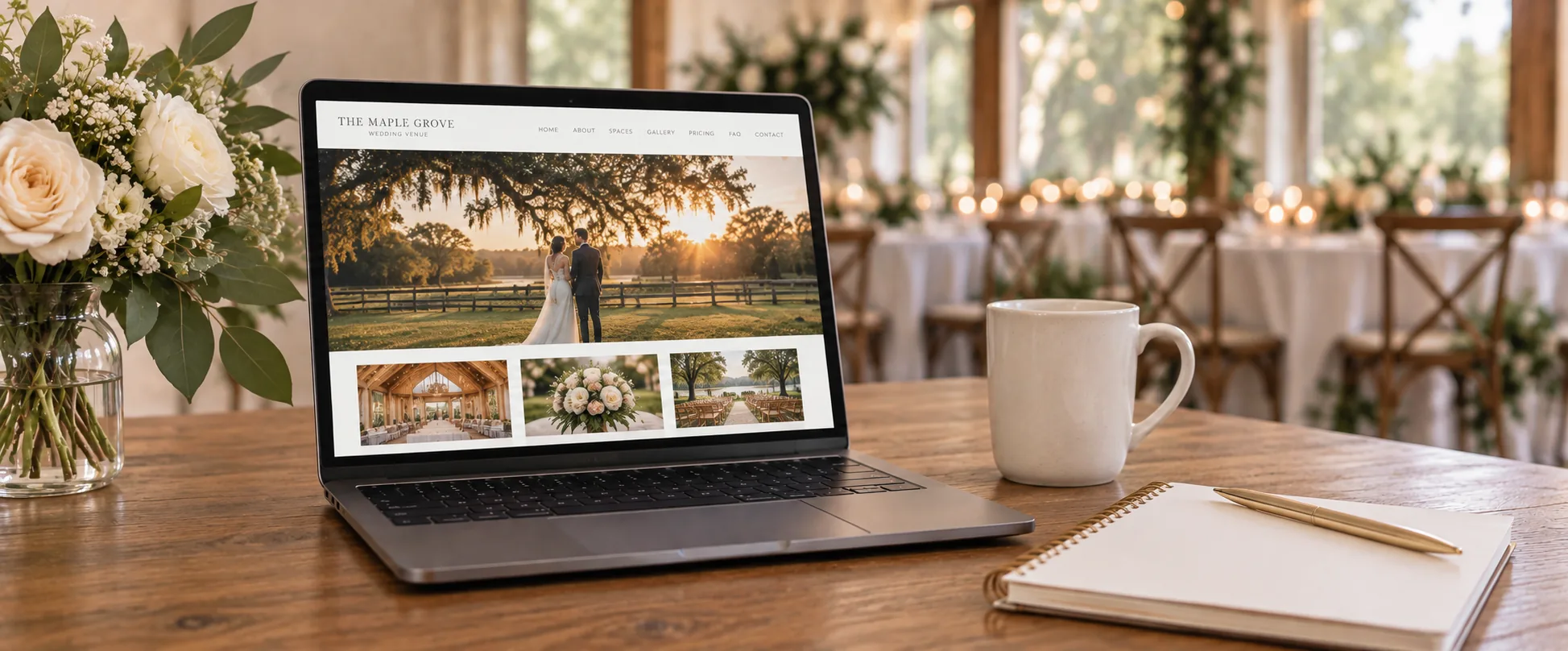
Pricing is one of the biggest questions couples have when researching wedding venues. Before they fall in love with your ceremony space, reception area, bridal suite, or waterfront view, they need to know whether your venue fits their budget.
Yet many wedding venue websites provide little or no pricing information. Couples see beautiful photos, read about the property, and eventually reach a button that says, “Contact Us for Pricing.”
That may generate an inquiry, but it doesn’t necessarily generate a qualified inquiry.
A couple with a $6,000 venue budget doesn’t benefit from scheduling a tour of a venue that starts at $12,000. The venue doesn’t benefit either. Your team spends time answering emails, making phone calls, following up, and potentially conducting a tour for a couple who was never financially qualified to book.
Your website doesn’t necessarily need to publish every price, fee, upgrade, and package combination. But it should give couples enough pricing information to determine whether your venue belongs on their shortlist.
Couples Are Already Thinking About Price
Wedding venue owners naturally want couples to see the value of the property before focusing on price. That makes sense. Your venue is more than a number.
Couples, however, are researching venues while working within a budget.
They may love your photos and think your property looks perfect, but they’re still wondering:
- How much does it cost?
- What does the rental include?
- Is there a minimum?
- Are Saturdays more expensive?
- Are weekday weddings less expensive?
- Does pricing change throughout the year?
- Are tables and chairs included?
- Is there an additional ceremony fee?
- Are there required service charges?
- What will we actually spend to have our wedding here?
If your website doesn’t answer any of these questions, couples have to decide whether contacting you is worth the effort.
Some will.
Others will move on to a venue that gives them enough information to make a more informed decision.
You Don't Have to Publish Every Price to Be Transparent
Pricing transparency doesn’t mean you need to put your entire internal pricing structure on your website.
Wedding venue pricing can get complicated. You may have different rates based on the day of the week, season, guest count, rental length, package, ceremony location, or included services.
Trying to publish every possible combination could confuse couples more than it helps them.
Instead, determine the minimum amount of information a couple needs to decide whether your venue fits their general budget.
For some venues, that could be:
Wedding packages start at $7,500.
For another venue:
Saturday venue rentals range from $8,500 to $11,000 depending on the season.
Or:
Venue rentals start at $5,500 for weekday weddings and $8,000 for Friday and Saturday weddings.
Those statements don’t tell couples exactly what their wedding will cost. They aren’t supposed to.
They give couples a realistic starting point.
Starting Prices Can Filter Out the Wrong Inquiries
Not every website inquiry is valuable.
If your venue starts at $10,000 and someone has a total wedding budget of $12,000, getting that person to submit a form doesn’t accomplish much.
Your inquiry count goes up, but your chance of booking the wedding doesn’t.
Publishing a starting price or realistic price range can help couples qualify themselves before contacting you.
A couple who sees that your packages start at $10,000 can decide whether that works for their budget. If it does, they’re more likely to continue researching your venue, explore your spaces, review what’s included, and schedule a tour.
If it doesn’t, they can continue their search.
That may mean fewer inquiries in some cases, but more inquiries isn’t always the goal. Better-qualified inquiries are.
Explain What Couples Get for the Price
A number without context doesn’t tell couples much about the value of your venue.
Imagine two venues both charge $8,000.
One includes tables, chairs, ceremony seating, setup, cleanup, a bridal suite, groom’s room, parking, and an hour for the rehearsal.
The other includes only the building.
Those are two very different offers even though the advertised price is identical.
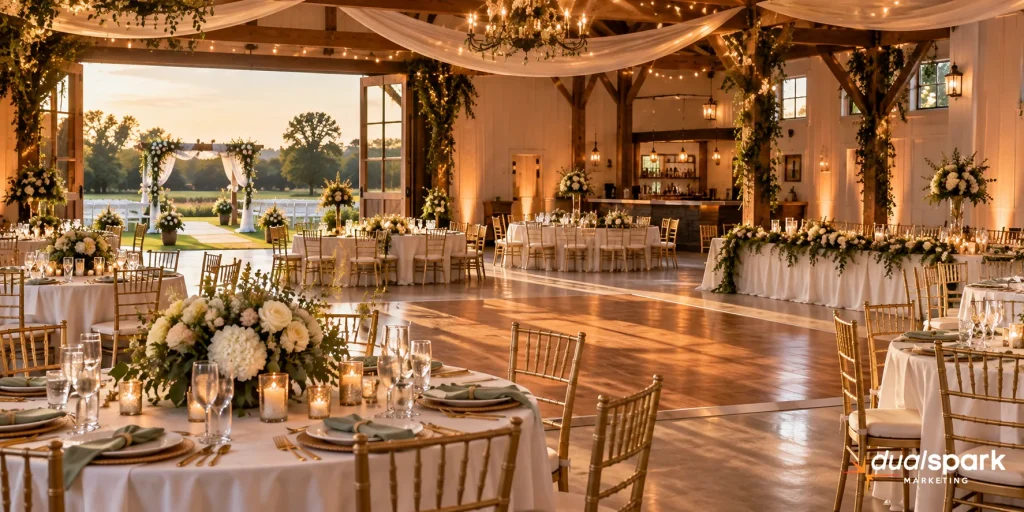
Your pricing page should help couples understand what’s included with the venue rental or package.
Depending on your property, that might include:
- Ceremony and reception spaces
- Tables and chairs
- Getting-ready suites
- Setup and breakdown
- Rehearsal time
- Parking
- Restrooms
- Décor items
- Bar areas
- On-site venue staff
- Climate-controlled spaces
- Outdoor areas
- Cleanup
Don’t assume couples know what’s included simply because you consider those amenities standard.
Spell it out.
The clearer you explain what couples receive, the easier it is for them to understand the value behind your pricing.
Explain the Pricing Differences That Actually Matter
You don’t need to overwhelm couples with every possible pricing scenario. Focus on the differences most likely to affect their decision.
If Saturday costs significantly more than Thursday, Friday, or Sunday, tell them.
If you offer lower rates during certain months, explain your seasonal pricing.
If your ceremony space requires an additional fee, make that clear.
If guest count changes the package price, explain how.
For example:
Saturday rentals start at $9,500, while Friday and Sunday rentals start at $7,500.
That information could immediately help a couple realize they can afford your venue by choosing a different day.
Without it, they might assume your venue is completely outside their budget and never contact you.
Pricing information shouldn’t simply tell couples what something costs. It can also help them discover ways to make your venue work within their budget.
Don't Hide Required Fees
Few things create pricing frustration faster than discovering required fees late in the booking process.
If couples must pay a required cleaning fee, security fee, service charge, ceremony fee, or other mandatory expense, consider explaining it before they reach the contract stage.
You don’t necessarily need to publish every small potential charge. Optional upgrades and custom additions can be discussed later.
Required costs are different.
If virtually every couple has to pay a particular fee, it is part of the realistic cost of booking your venue.
Being clear about required expenses helps couples build a more accurate budget and reduces the chance of them feeling surprised later.
Pricing Information Can Make Venue Tours More Productive
Your website isn’t meant to replace your venue tour.
It should prepare couples for it.
When couples arrive already understanding your general pricing, they can spend more of the tour focusing on the property itself.
Instead of waiting until the end of the tour to discover whether they can afford the venue, they can ask more meaningful questions about ceremony options, reception layouts, guest flow, amenities, vendors, décor, and logistics.
Your team also knows the couple has already seen your starting price or pricing range and still decided the venue was worth visiting.
That creates a better conversation for everyone involved.
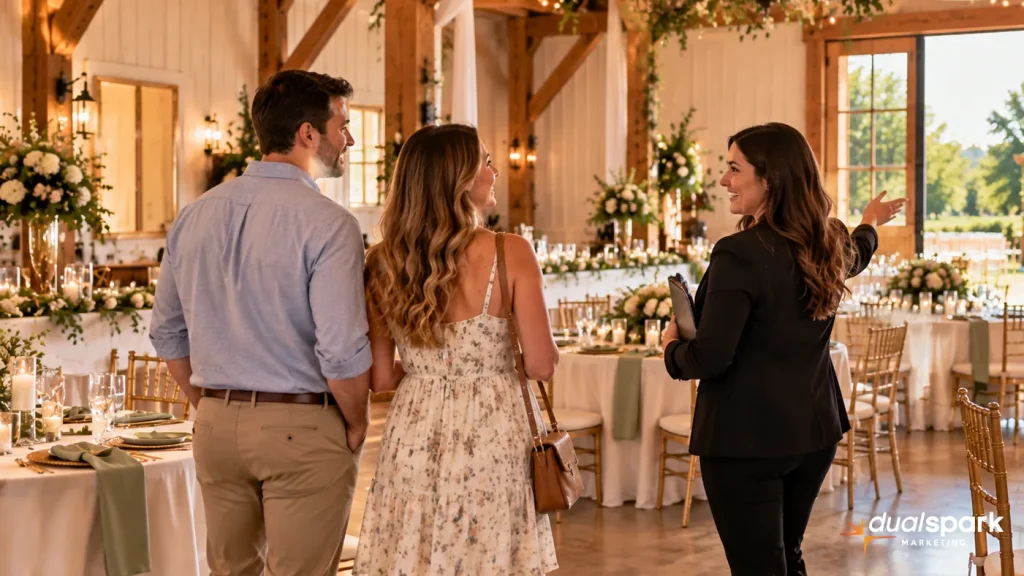
“Contact Us for Pricing” Creates an Extra Step
Every extra step you require couples to take creates another opportunity for them to leave your website.
When couples see “Contact Us for Pricing,” you’re asking them to trade their personal information for one of the most basic pieces of information they need to decide.
They submit the form.
Then they wait.
Maybe an automated email arrives. Maybe someone calls them. Maybe your team sends a brochure. Maybe the response lands in spam.
Meanwhile, the couple may be researching five or ten other venues.
If another venue clearly displays its starting price, what’s included, and available packages, that couple can keep evaluating it right away.
You shouldn’t make couples work unnecessarily hard to determine whether they can afford your venue.
Your Pricing Page Should Do More Than Display Numbers
A strong wedding venue pricing page isn’t a price sheet.
It is a sales page.
Pricing should be part of the page, but it shouldn’t be the only thing on it.
Use the page to reinforce the value couples receive when they book your venue. Explain your packages, what’s included, how rental options differ, and which amenities come standard.
Include real wedding photography throughout the page so couples continue picturing themselves at your property while reviewing the financial details.
You can also answer common pricing questions directly on the page.
For example:
Can we make payments?
Is a deposit required?
When is the final balance due?
Do you offer weekday pricing?
Are there seasonal discounts?
Are tables and chairs included?
Is there an additional ceremony fee?
Are taxes or service charges included?
Answering these questions reduces uncertainty and helps couples move closer to scheduling a tour.

Pricing Information Can Help Your Wedding Venue With Google Search
Couples don’t search only for “wedding venues near me.”
Budget often becomes part of the search.
Someone might search for:
- Affordable wedding venues in their area
- Wedding venues under $10,000
- Wedding venues with packages
- Wedding venues with tables and chairs included
- Wedding venues with weekday pricing
- Wedding venues with all-inclusive packages
- Wedding venue rental prices
If your website doesn’t contain meaningful pricing information, search engines have less information to work with when trying to understand whether your venue answers those searches.
That doesn’t mean adding “affordable wedding venue” to your website twenty times.
Provide genuinely useful information about your pricing, packages, included amenities, and available options. That gives both couples and search engines better context.
Pricing Information Is Also Important for AI Search
AI-powered search makes specific website information even more important.
Couples can now ask detailed questions instead of searching with only a few keywords.
Someone could ask:
Which wedding venues near Jacksonville have packages under $10,000?
Another couple might ask:
Which barn wedding venues include tables and chairs in the rental price?
Or:
Are there wedding venues with cheaper Friday or Sunday packages?
An AI system can’t reliably determine that your venue fits those requests if your website doesn’t provide the information.
If your website simply says, “Contact us to learn about our wedding packages,” there isn’t much useful pricing information for a search system to understand.
Compare that with:
Our venue rentals start at $7,500 and include ceremony and reception spaces, tables, chairs, getting-ready suites, setup, and cleanup. Friday and Sunday weddings are available at lower starting rates than Saturdays.
That gives couples useful information while giving search systems clear facts about your venue.
Use Your Pricing Page to Set Expectations
Your pricing page can also explain how your booking process works.
After couples review your pricing, tell them what happens next.
Maybe they schedule a private tour. Perhaps they check available dates first. Maybe they submit a form and receive your complete pricing guide.
Whatever your process looks like, explain it.
Couples shouldn’t reach the bottom of your pricing page and wonder what they’re supposed to do next.
Give them a clear path from researching your venue to taking the next step.
Should You Require an Email Address to See Wedding Venue Pricing?
Some venues require couples to enter their name and email address before they can access a pricing guide.
This can help build your lead database, but it also creates another barrier between the couple and the information they’re looking for.
No single approach works for every wedding venue.
You could publish starting prices and what’s included on the website, then offer a more detailed pricing guide after a couple submits a form.
That gives couples enough information to qualify themselves without requiring you to publish every package detail publicly.
It also makes the downloadable guide more valuable because it provides additional information rather than withholding everything until the couple gives you their contact information.
Frequently Asked Questions About Wedding Venue Pricing Pages
Should Wedding Venues Put Their Prices on Their Website?
Wedding venues should provide enough pricing information for couples to determine whether the venue realistically fits their budget. That doesn’t necessarily mean publishing every package, fee, and optional upgrade.
A starting price or realistic pricing range can often provide the information couples need during the early stages of their search. You can then provide more detailed package information after they inquire or schedule a tour.
The goal is to prevent couples from spending time researching or touring a venue they could never realistically afford while helping qualified couples feel more comfortable taking the next step.
Is It Better to Show a Starting Price or a Price Range?
That depends on how your venue structures its pricing.
A starting price works well when packages vary significantly based on options, guest counts, or dates. A price range may work better when most weddings fall within a relatively predictable range.
Whichever approach you choose, make sure the number represents what couples can realistically expect. A very low starting price tied to a date or package that almost nobody books can create the wrong expectations.
Pricing should help couples understand your venue, not simply get them to submit a form.
Will Showing Wedding Venue Pricing Reduce Inquiries?
It can reduce inquiries from couples whose budgets don’t align with your venue. That isn’t necessarily a negative result.
If someone can’t realistically afford your venue, getting that person to submit an inquiry doesn’t make the lead more valuable.
Clear pricing can help couples qualify themselves before contacting you. The inquiries you do receive may come from couples who already understand your general price point and still want to learn more about the venue.
What Pricing Information Should a Wedding Venue Website Include?
At minimum, consider providing a starting price or typical range along with an explanation of what’s included.
You can also explain major differences between weekday and weekend pricing, seasonal rates, required fees, deposits, payment schedules, ceremony charges, and package options when those details significantly affect the total cost.
Focus on the information couples need to determine whether your venue belongs on their shortlist.
Should Wedding Venues List What's Included With Their Rental Price?
Yes. What’s included can be just as important as the price itself.
Tables, chairs, getting-ready suites, ceremony seating, setup, cleanup, parking, décor, and other amenities have real value. If couples would otherwise need to rent those items separately, including them can make your venue more competitive than the starting price alone suggests.
Clearly explaining what’s included helps couples compare venues more accurately.
Should Wedding Venues Publish Weekday and Weekend Pricing?
If the difference is significant, publishing it can help couples discover options they might not otherwise consider.
A couple may assume they can’t afford your venue based on Saturday pricing but discover that a Friday, Sunday, or weekday wedding fits comfortably within their budget.
You don’t necessarily need to publish every day’s exact rate. Showing starting prices or general differences can still help couples understand their options.
Should Wedding Venues Include Required Fees on Their Pricing Page?
If a fee applies to nearly every booking, couples should know about it before getting deep into the sales process.
Required cleaning fees, service charges, ceremony fees, security fees, or similar expenses can significantly affect the actual cost of booking the venue.
Being clear about mandatory expenses helps couples budget accurately and reduces surprises later in the process.
Can a Wedding Venue Still Offer a Downloadable Pricing Guide?
Absolutely. Publishing useful pricing information on your website doesn’t eliminate the need for a detailed pricing guide.
Your website can provide starting prices, package summaries, major inclusions, and common pricing questions. Your downloadable guide can then provide more detailed package comparisons, optional upgrades, payment information, and additional booking details.
That makes the guide an extension of your website, not a gate couples must pass through just to discover your basic price point.
Can Wedding Venue Pricing Pages Help With SEO and AI Search?
A detailed pricing page gives search engines and AI-powered systems specific information about your venue’s pricing structure, packages, inclusions, and options.
That information may help these systems better understand whether your venue relates to searches involving budgets, package pricing, weekday rates, included amenities, or other pricing-related questions.
The key is specificity. Avoid filling the page with vague marketing statements. Give couples clear, factual information they can actually use when comparing venues.
What Should Couples Do After Reviewing a Wedding Venue's Pricing?
Your pricing page should make the next step obvious.
If the couple understands your pricing and believes the venue fits their budget, direct them toward the next stage of your sales process. That might mean checking availability, scheduling a tour, requesting a complete pricing guide, or contacting your venue.
Don’t make qualified couples search your website to figure out how to move forward.
Final Thoughts: Pricing Transparency Can Lead to Better-Qualified Venue Tours
Your wedding venue website doesn’t need to reveal every possible price before a couple contacts you. It does need to give couples enough information to decide whether continuing the conversation makes sense.
Starting prices, realistic ranges, package inclusions, major pricing differences, and required fees can remove uncertainty without turning your website into a complicated rate sheet.
More importantly, pricing transparency helps couples qualify themselves.
Instead of measuring success only by how many people fill out your contact form, focus on whether those inquiries have a realistic chance of becoming booked weddings.
At Dual Spark Marketing, we build wedding venue websites around the questions couples actually ask while researching venues. Pricing, amenities, ceremony spaces, reception options, availability, FAQs, and other important information should work together to help couples understand your venue before they schedule a tour.
The goal isn’t to hide information until you capture a lead. It’s to give the right couples enough confidence to take the next step.