Your wedding venue About page should do more than explain when the property opened or how long you have been in business.
Couples want to know who they are trusting with one of the most important days of their lives. They want to understand the people behind the venue, the story behind the property, and what makes your team different from every other venue they are considering.
A strong About page can help build that trust before a couple ever calls, emails, or schedules a tour.
It can also support your SEO by giving search engines more context about your business, your location, your experience, and the services you provide. More importantly, it gives couples a reason to feel connected to your venue instead of viewing it as just another building with tables and chairs.
Why Your Wedding Venue About Page Matters
Many wedding venue websites treat the About page like a formality.
The page may include a few sentences about the owners, a short history of the property, and maybe one team photo. Then the page ends.
That is a missed opportunity.
Your About page gives you a place to explain who you are, why you operate the venue, and what couples can expect when they work with you.
That matters because couples are not only comparing:
- Guest capacity
- Pricing
- Amenities
- Ceremony spaces
- Reception spaces
- Parking
- Photo opportunities
They are also comparing the people behind those features.
A beautiful venue may get someone’s attention, but trust often plays a major role in whether they decide to schedule a tour or sign a contract.
Couples Want to Know Who They Are Booking With
A wedding venue is not like renting a table or ordering flowers online.
Couples may spend months communicating with your team before the wedding day. They may rely on you for planning details, vendor access, setup questions, weather decisions, timelines, and day-of coordination.
They want to know who will be involved.
Your About page should introduce the people behind the business.
That may include:
- Owners
- Venue managers
- Sales staff
- Event coordinators
- Family members involved in the business
- Property managers
- Other key team members
You do not need to create a long biography for every person.
A short introduction can help couples understand who they may speak with and what role that person plays.
For example, instead of writing:
“Meet Sarah, our venue manager.”
You could write:
“Sarah works directly with couples from the first tour through the final planning stages. She helps answer venue questions, coordinates important details, and makes sure couples understand what to expect before the wedding day.”
That description feels more personal and useful.
Tell the Story of Your Venue
Every wedding venue has a story.
Maybe you converted a family property into an event space. Maybe you restored a historic building. Maybe you built the venue because your area lacked the type of space you wanted to create.
Your story can help couples remember your venue.
The key is to make the story relevant to them.
Do not spend the entire page talking about yourself without connecting it back to the experience you provide.
For example, if your venue began as a family farm, explain how that history shaped the property today.
If you restored an older building, explain how you preserved its character while adding the features modern couples need.
If you designed the venue from the ground up, explain which planning problems you wanted to solve.
The story should help couples understand why the venue looks, feels, and operates the way it does.
Do Not Make the About Page Only About You
This may sound contradictory, but a good About page should not focus entirely on the owners.
Couples are interested in your story, but they are still asking themselves one main question:
“What does this mean for my wedding?”
Your page should connect your background with the value you provide.
For example:
If you have years of event experience, explain how that helps you anticipate common planning issues.
If you built the venue after hosting family events, explain how that helped you understand the importance of guest comfort.
If you designed the property with separate ceremony and reception areas, explain how that can create a smoother event flow.
Keep bringing the story back to the couple.
Explain What Makes Your Venue Different
Your About page is a good place to explain why your property stands out.
Do not rely on vague phrases such as:
- One-of-a-kind venue
- Unforgettable experience
- Dream wedding location
- Perfect place for your special day
Those phrases can apply to almost any venue.
Instead, explain the real differences.
You might highlight:
- A private setting
- Multiple ceremony options
- Indoor and outdoor spaces
- Flexible vendor policies
- All-inclusive packages
- Weekend access
- Onsite accommodations
- Large guest capacity
- Intimate event options
- Historic architecture
- Waterfront views
- Unique photo locations
- Family ownership
- Hands-on planning support
Specific details help couples understand what makes your venue worth considering.
Introduce Your Team Like Real People
Professional does not have to mean stiff.
Couples usually respond better to a team that feels approachable.
Use natural language when introducing your staff.
You can mention:
- How long they have worked at the venue
- What they help couples with
- What they enjoy most about weddings
- Their role in the planning process
- Their experience in hospitality or events
Avoid making every team bio sound like a corporate resume.
The goal is to help couples feel like they already know the people they may meet during a tour.
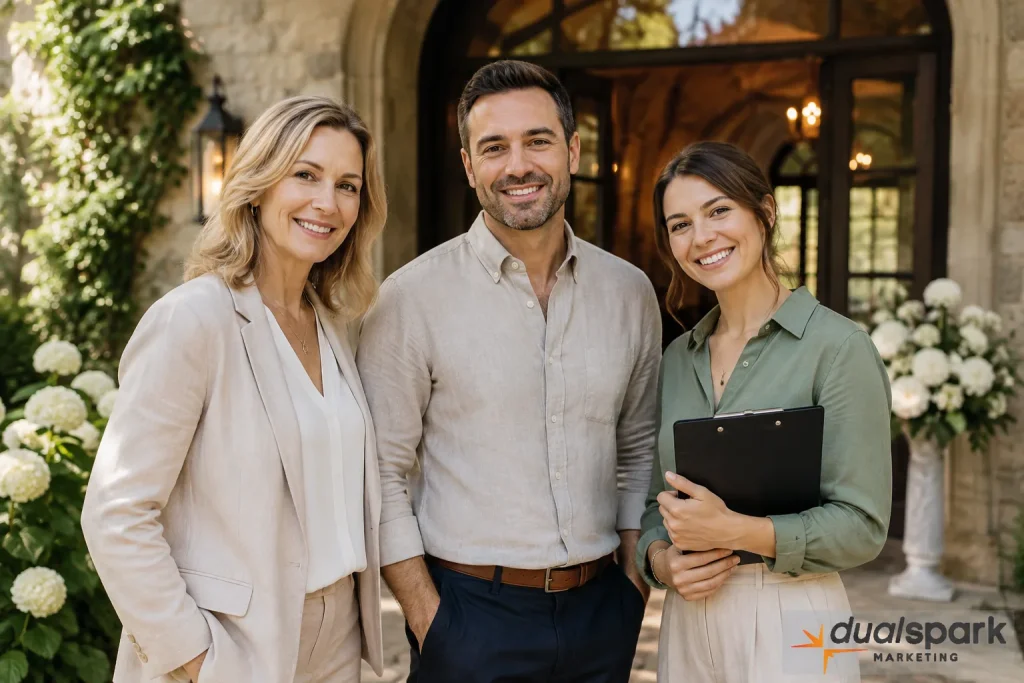
Use Real Photos of Your Team
Stock photos should not appear on your About page.
Couples want to see the actual people behind the business.
Use real photos of:
- Owners
- Managers
- Coordinators
- Staff members
- The team working at events
- The team preparing the property
- Casual behind-the-scenes moments
Professional photography can help, but the images should still feel natural.
A polished team photo works well, but so can a candid image of your staff preparing a ceremony space or greeting a couple during a tour.
These photos can make the venue feel more personal.
Show the Property’s History When It Matters
If your venue has a meaningful history, include it.
That may involve:
- A historic home
- A family farm
- A restored barn
- A former industrial property
- A longtime local landmark
- A family-owned estate
Explain the history clearly, but do not turn the About page into a history lesson.
Focus on the details that help couples understand the property.
For example, you may explain:
- What parts of the property were restored
- What original features remain
- How the venue has changed over time
- Why certain spaces were preserved
- How the history adds character to events
This can give your venue more personality and help it stand out from newer or more generic properties.
Explain Your Connection to the Local Area
Your venue exists in a community, and that connection can help build trust.
You may mention:
- How long the business has operated locally
- Nearby communities you regularly serve
- Local vendors you work with
- Local charities or organizations you support
- Regional wedding traditions
- The area’s scenery or character
This can also give search engines additional context about your location and service area.
Do not force city names into every paragraph.
Use local references naturally when they help explain your venue or business.
Highlight Your Experience Without Sounding Corporate
Experience can help reassure couples.
If your team has hosted hundreds of events, managed weddings for several years, or worked in hospitality before opening the venue, explain that.
However, avoid language that sounds too formal.
Instead of:
“Our management team possesses extensive operational experience in the event hospitality sector.”
Say:
“Our team has spent years helping couples plan weddings and private events, so we understand the questions that usually come up before the big day.”
The information stays the same, but it sounds more human.
Explain Your Approach to Working With Couples
Couples want to know what the planning experience will feel like.
Use your About page to explain how your team works.
You may discuss:
- Communication
- Tour process
- Planning support
- Vendor coordination
- Rehearsals
- Final walkthroughs
- Day-of expectations
- Flexibility
- Response times
For example:
“We believe couples should always know what happens next. From the first tour through the final walkthrough, our team explains each step and makes sure you know who to contact when questions come up.”
This type of statement helps set expectations and build confidence.
Add Testimonials or Review Highlights
A few carefully selected testimonials can strengthen the About page.
Use reviews that talk about:
- The team
- Communication
- Helpfulness
- Planning support
- Professionalism
- Responsiveness
- The overall experience
These reviews support what you say about your team.
For example, if you describe your staff as responsive and helpful, a review that confirms that experience adds credibility.
Do not overload the page with too many testimonials.
A few strong examples usually work better than a long wall of reviews.
Connect Your About Page to Other Important Pages
Your About page should not become a dead end.
Use internal links to guide couples toward more useful information.
You may link to:
- Pricing
- Amenities
- Wedding packages
- Floor plans
- Photo gallery
- Real weddings
- FAQs
- Availability
- Schedule a tour
- Contact
For example, if you mention that your team designed the venue with multiple ceremony options, link to the page that shows those spaces.
If you mention that couples receive planning support, link to the page that explains what the rental includes.
These connections make the page more useful.
Add a Clear Call to Action
Do not end the About page with a team photo and nothing else.
After couples learn who you are and why your venue exists, give them a clear next step.
You may invite them to:
- Schedule a tour
- Check availability
- Request pricing
- View the gallery
- Explore wedding packages
- Contact the team
Use clear language.
A button such as “Schedule a Private Tour” usually works better than “Learn More.”
Keep the About Page Updated
Your About page should reflect the current business.
Update it when:
- Team members change
- Ownership changes
- You add new services
- You complete major renovations
- You update your planning process
- You reach important milestones
- You change the way couples work with your team
An outdated About page can create awkward situations.
If a couple sees a staff member on the website who left two years ago, it can make the site feel neglected.
Review the page at least a few times each year.
Common Wedding Venue About Page Mistakes
Making the Page Too Short
A few sentences and one photo may not give couples enough information to build trust.
Writing Only About the Owners
Connect your story to the experience couples receive.
Using Generic Marketing Language
Explain what actually makes the venue different.
Using Stock Photos
Show the real people behind the business.
Sounding Too Corporate
Write like a real person speaking to a couple.
Forgetting the Team
If several people help couples, introduce them.
Leaving Out the Venue Story
Give couples a reason to remember the property.
Failing to Link Other Pages
Guide visitors toward pricing, galleries, FAQs, and tours.
Forgetting the Call to Action
Give couples a clear next step.
Allowing the Page to Become Outdated
Keep team information, photos, and business details current.
Frequently Asked Questions About Wedding Venue About Pages
What should a wedding venue include on its About page?
A wedding venue About page should explain who you are, how the venue started, who couples will work with, what makes the property different, and what type of experience you want to provide. It should also include real photos of the owners or team, information about your experience, details about your connection to the local area, and links to important pages such as pricing, amenities, galleries, availability, and tour scheduling.
The strongest About pages do more than tell your history. They help couples understand what it will feel like to work with you. A couple should leave the page knowing who is behind the business, why the venue exists, and what makes your team worth trusting with their wedding day.
Why is an About page important for a wedding venue website?
An About page helps turn a wedding venue from a building into a business couples can connect with. Many venues may offer similar guest capacities, ceremony spaces, reception areas, and amenities. Your team, story, experience, and approach can help separate you from competitors that look similar on paper.
It can also remove uncertainty. Couples often want to know who they will communicate with, how involved the venue team will be, and whether the people behind the business seem organized and approachable. A strong About page can answer those questions before the couple ever schedules a tour.
Can a wedding venue About page help with SEO?
A well written About page can support SEO because it gives search engines more context about your business, your location, your services, your team, and the type of venue you operate. It can also strengthen the internal structure of your website when you link the page to related content such as pricing, amenities, wedding packages, galleries, FAQs, availability, and tour scheduling.
However, you should not treat the About page as a place to stuff city names or wedding venue keywords. The page should first help real people understand your business. Natural language, specific information, and useful internal links usually create a much stronger page than repeating the same search phrases throughout the content.
How long should a wedding venue About page be?
There is no perfect word count for a wedding venue About page. The page should be long enough to answer the questions couples are likely to have without adding information just to make the page longer.
A venue with a long history, multiple owners, several team members, or a unique property may need more content. A smaller venue may need less. Focus on whether the page clearly explains your story, introduces the important people behind the business, describes your experience, and helps couples understand what makes your venue different.
Should a wedding venue About page include the owners and staff?
Yes, especially if those people regularly communicate with couples. Introducing your owners, venue managers, sales staff, coordinators, or other key team members can make the business feel more personal and trustworthy.
You do not need to publish a biography for every employee. Focus on the people couples are most likely to meet or communicate with. Explain what each person does and how they help during the tour, planning process, or wedding day. This is usually more useful than listing job titles without any context.
What kind of photos should a wedding venue use on its About page?
Use real photos of your owners, managers, coordinators, and team whenever possible. Couples want to see the people behind the business, so stock photos can weaken the purpose of the page.
You can use a professional team photo, individual staff photos, or natural behind the scenes images of your team giving tours, preparing the venue, or helping during events. The photos should feel polished but authentic. They should reinforce the idea that real people are available to help couples throughout the planning process.
Should a wedding venue tell its full history on the About page?
You should include the parts of your history that help couples understand the venue, but you do not need to document every detail. Focus on the story that explains how the venue started, why the property matters, and how that history shapes the experience you provide today.
For example, if the venue began as a family farm, explain how the property evolved into an event space. If you restored a historic building, explain what you preserved and why. If you built the venue from the ground up, explain what you wanted to create for couples. The history should support the customer experience, not overwhelm it.
How can a wedding venue About page build trust with couples?
Trust comes from specific, believable information. Explain who couples will work with, how your team communicates, what experience you have, and what couples can expect during the planning process. Real team photos, review highlights, and clear explanations of your approach can make the page feel much more credible.
Avoid vague promises such as saying you provide an unforgettable experience without explaining what that means. Instead, describe how you help with tours, planning questions, vendor access, walkthroughs, or event preparation. Specific examples make your claims easier for couples to believe.
Final Thoughts: Turn Your About Page Into a Reason to Schedule a Tour
Your About page should do more than tell couples who owns the venue. It should help them understand your story, meet the people behind the business, and feel confident about what it will be like to work with your team. When you use real photos, specific details, helpful internal links, and a clear call to action, the page can become an important part of the decision making process instead of just another page on your website.
At Dual Spark Marketing, we help wedding venues build websites that are designed to do more than look good. Our approach focuses on local SEO structure, stronger user engagement, and clear conversion paths that can help generate more qualified inquiries and scheduled tours. If your current About page feels outdated, too generic, or disconnected from the rest of your website, we can help turn it into a stronger trust building page that supports both your marketing and your booking goals.