Your property may host more than weddings.
You might also book rehearsal dinners, bridal showers, corporate meetings, holiday parties, birthday celebrations, fundraisers, and other private events. However, many wedding venue websites place all these opportunities on one general page titled “Events.”
That approach may seem simple, but it often limits your website.
A couple planning a wedding needs different information than a company planning an employee banquet. A family organizing a baby shower has different questions than someone planning a celebration of life. When you send every audience to the same general page, you force visitors to search for the few details that apply to them.
You also make it harder for search engines to understand which events your venue hosts.
At Dual Spark Marketing, we recommend creating a dedicated website page for each event type you actively want to book. These pages can improve your SEO, strengthen your advertising campaigns, generate better inquiries, and help your venue earn revenue on dates that may otherwise remain open.
What Is a Dedicated Event Page?
A dedicated event page focuses on one specific type of event your venue hosts.
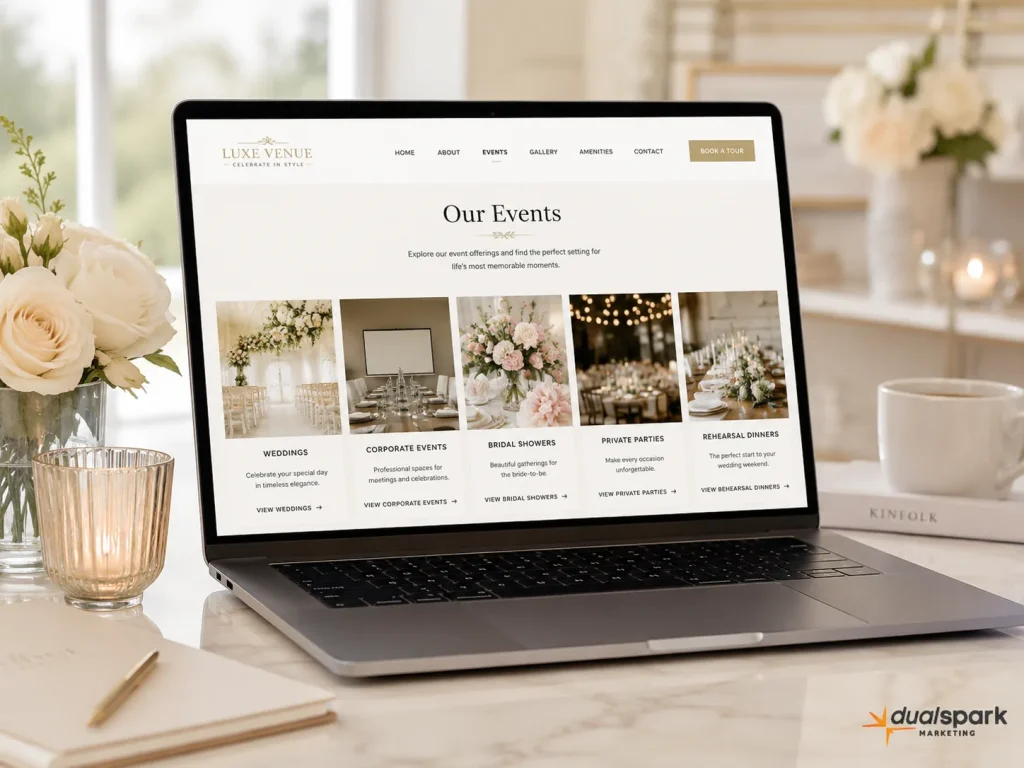
Instead of placing every event under one broad page, you may create separate pages for:
- Weddings
- Micro weddings
- Elopements
- Rehearsal dinners
- Bridal showers
- Baby showers
- Birthday parties
- Anniversary parties
- Quinceañeras
- Corporate meetings
- Company parties
- Holiday parties
- Fundraisers
- Graduation parties
- Celebration of life events
Each page should explain how your venue works for that particular occasion.
For example, a corporate event page may focus on seating arrangements, presentation equipment, internet access, catering, parking, and weekday availability.
A bridal shower page may focus on natural lighting, photo opportunities, food service, decorations, guest capacity, and available rental times.
The property stays the same, but the way you present it should reflect the needs of each audience.
One General Events Page Cannot Answer Every Question
A broad event page usually includes a few photos and a short list of occasions the venue accepts.
It may say:
“Our beautiful venue is perfect for weddings, parties, corporate events, showers, and other special occasions.”
That statement tells visitors that you host different events, but it does not help them understand how the venue fits their needs.
A company event planner may still wonder:
- Can the venue support a presentation?
- Is wireless internet available?
- Can we use a weekday morning?
- Are tables and chairs included?
- Can we arrange classroom seating?
- Is there enough parking for employees?
- Can we bring outside catering?
Someone planning a bridal shower may ask:
- How many guests can the venue hold?
- Can we bring decorations?
- Is there enough time for setup?
- Does the venue include tables and chairs?
- Can we serve brunch or desserts?
- Is there a private space for gifts?
- Can we take photos throughout the property?
When one page tries to serve every audience, it usually answers none of them completely.
Dedicated event pages give you the space to address the questions that matter to each potential client.
Separate Event Pages Help Search Engines Understand Your Services
Search engines need clear information to understand what your business offers.
A general events page may tell Google that you rent an event space, but it may not provide enough detail to connect your website with searches for specific occasions.
People may search for:
- Bridal shower venues near me
- Corporate event venues
- Rehearsal dinner venues
- Birthday party venues
- Holiday party venues
- Micro wedding venues
- Quinceañera venues
- Baby shower venues
- Fundraiser event spaces
- Celebration of life venues
Each search represents a different need.
A dedicated page allows you to focus on the event type naturally. You can explain the appropriate spaces, capacity, amenities, rental options, and planning details without forcing unrelated information onto the page.
This gives search engines more context and gives your venue more opportunities to appear for relevant searches.
Different Event Types Have Different Search Intent
Search intent refers to what a person hopes to find when they search online.
Someone searching for a wedding venue may want:
- Ceremony and reception spaces
- Bridal and groom suites
- Rain backup plans
- Wedding packages
- Floor plans
- Preferred vendors
- Tour availability
Someone searching for a corporate event venue may care more about:
- Weekday availability
- Presentation space
- Flexible seating
- Catering
- Parking
- Internet access
- Audio equipment
- Easy guest arrival
Someone searching for a baby shower venue may want:
- A smaller rental option
- Daytime availability
- Tables and chairs
- Decorating access
- Food service options
- A bright and comfortable setting
- Simple pricing
You cannot serve these different search intents well with the same generic page.
When you create a separate page, you can match the content to what that visitor wants to know. This makes the page more useful and may improve the quality of the traffic it attracts.
Dedicated Pages Help Visitors Picture Their Event at Your Venue
Couples can often picture a wedding when they see a ceremony arch, reception tables, and a dance floor.
A business owner may look at those same photos and assume the property only hosts weddings.
A parent planning a graduation party may not realize that your venue offers shorter rentals or weekday availability. A company planner may not know that your reception space can support a conference layout.
Event specific pages help you present the property in a new way.
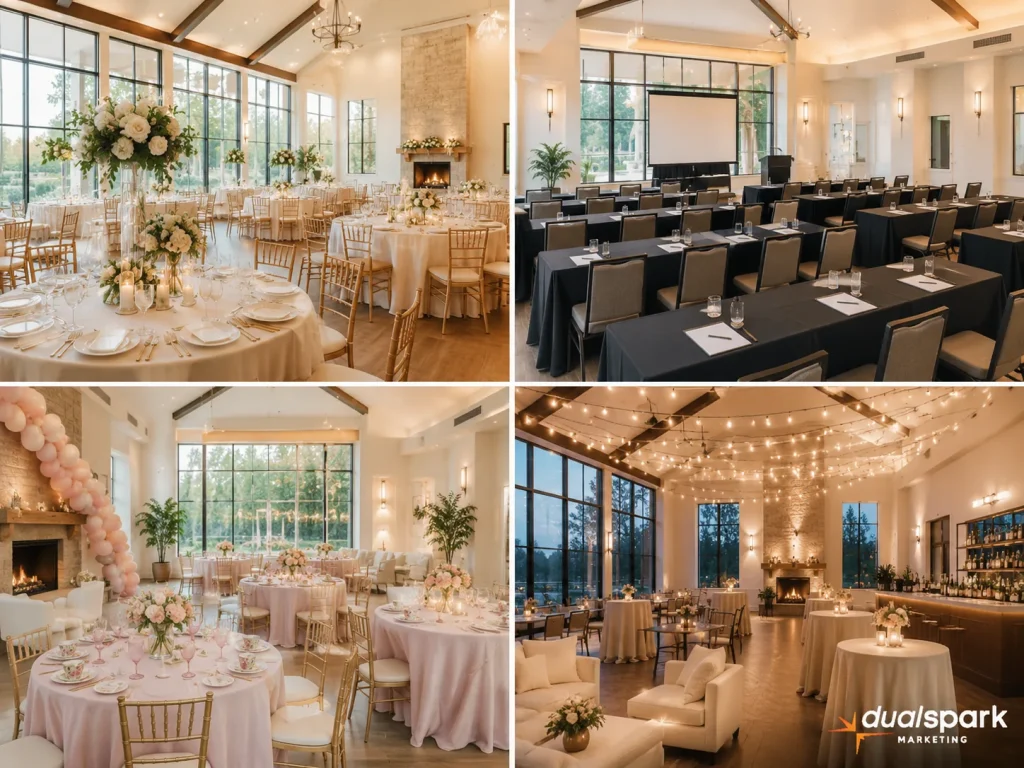
A corporate event page might show:
- A meeting layout
- A speaker or presentation
- Branded signs
- A company dinner
- Employees networking
- A buffet or beverage station
A bridal shower page might show:
- A decorated gift table
- Brunch service
- Small table arrangements
- Guests playing shower games
- A dessert display
- A photo area
The right photos and explanations help visitors see that your venue fits more than one kind of event.
Separate Pages Can Generate More Qualified Inquiries
A person who lands on a dedicated page can learn more before contacting your venue.
The page can explain:
- Which spaces are available
- How many guests can attend
- Which amenities you include
- What rental times you offer
- Whether weekday dates are available
- Which catering rules apply
- How setup and cleanup work
- Whether event specific packages exist
- How to request pricing
- How to schedule a tour
This information helps potential clients decide whether your venue fits their event.
Your team may receive fewer vague messages asking, “Do you host parties?”
Instead, you may receive inquiries that include the event type, guest count, preferred date, rental needs, and estimated budget.
Better informed visitors often become better leads.
Event Pages Can Help You Book Weekdays and Slower Dates
Weddings often concentrate around weekends and popular seasons.
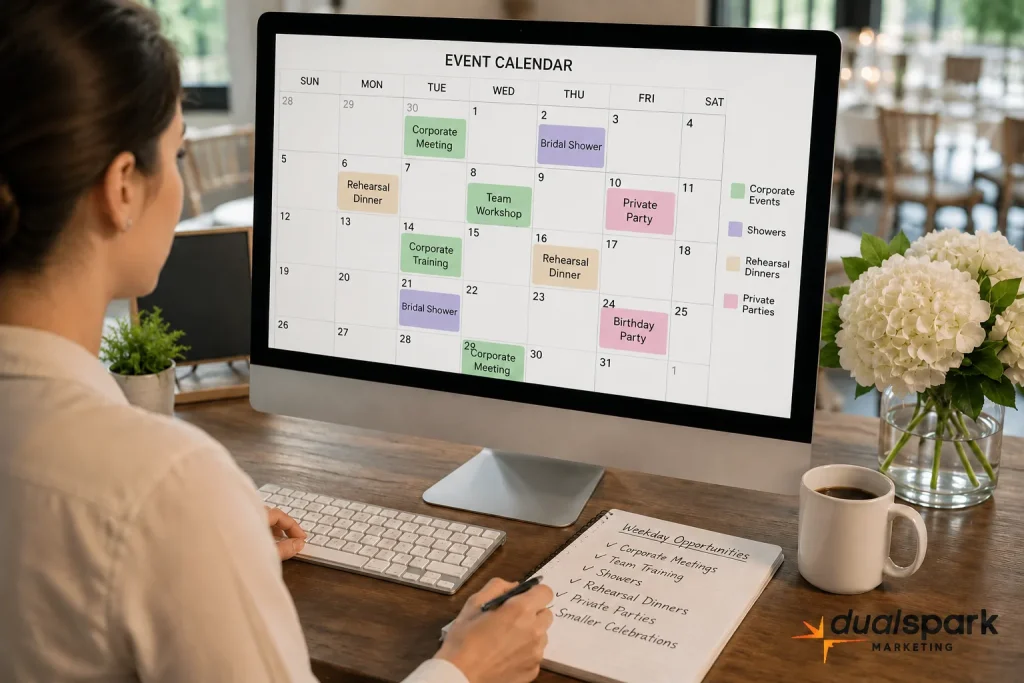
Other event types can help you generate revenue on dates that couples may not choose for a wedding.
Corporate meetings may take place during the week. Bridal showers and baby showers may use Sunday mornings or afternoons. Holiday parties may fill dates during the winter. Rehearsal dinners may create revenue on Thursday or Friday evenings.
Dedicated pages allow you to market those opportunities directly.
You can explain:
- Weekday rental options
- Shorter rental periods
- Daytime availability
- Off season packages
- Small event capacity
- Corporate pricing
- Holiday party packages
- Setup and cleanup services
Do not assume visitors know that you offer these options. Build pages that make the opportunities clear.
Which Event Types Should Receive Their Own Pages?
You do not need to create a page for every event your venue could possibly host.
Focus on the events you actively want to book and can serve well.
An event type may deserve a dedicated page when:
- You already receive inquiries for it
- You have hosted it successfully
- It can generate meaningful revenue
- It helps fill slower dates
- People search for it in your market
- Your property has features that fit the event
- You can provide useful and original information
- You have suitable photos
- You offer a specific package or rental option
Start with the strongest opportunities.
A venue may begin with separate pages for:
- Weddings
- Micro weddings
- Rehearsal dinners
- Bridal showers
- Corporate events
- Private parties
You can add more pages as you collect photos, testimonials, packages, and experience.
Your Main Wedding Page Should Remain Focused on Weddings
If weddings represent your primary business, your main wedding page should stay focused on couples.
Do not overload it with paragraphs about birthday parties, business meetings, and holiday events.
Couples should see wedding related information immediately, including:
- Ceremony options
- Reception spaces
- Guest capacity
- Getting ready suites
- Wedding amenities
- Pricing
- Floor plans
- Real weddings
- Reviews
- Tour scheduling
You can include a small section that mentions other private events and links to the appropriate pages.
This keeps the wedding page focused while making the rest of your services easy to find.
What Should Each Event Page Include?
Every event page should reflect the specific occasion, but most pages need several core elements.
A Clear Introduction
Explain that your venue hosts the event and identify the people the page serves.
Avoid vague statements that could apply to any event space. Tell visitors why your property fits this particular occasion.
Relevant Spaces
Describe which rooms, outdoor areas, or sections of the property work best for the event.
Include capacity and possible layouts.
Event Specific Amenities
Highlight the amenities that matter most to that audience.
For corporate events, this may include internet access, screens, power, parking, and flexible seating.
For showers, it may include tables, chairs, decorating access, natural light, catering options, and photo areas.
Rental Options
Explain whether you offer full day, half day, weekday, evening, or hourly options.
You do not need to publish every final rate, but visitors should understand how the rental may work.
Original Photos
Use photos that show the same or a similar event whenever possible.
Do not rely only on wedding reception photos for every event page.
Frequently Asked Questions
Answer questions about capacity, food, alcohol, decorations, rental time, setup, cleanup, parking, and accessibility.
A Clear Call to Action
Invite the visitor to request pricing, check availability, schedule a tour, or discuss the event with your team.
Create a Dedicated Page for Micro Weddings
Micro weddings often require different information than traditional weddings.
Couples may want a shorter rental, smaller ceremony area, simplified package, weekday date, or intimate dinner setup.
A micro wedding page can explain:
- Guest count limits
- Available spaces
- Package options
- Ceremony and reception layouts
- Rental duration
- Included furniture
- Photography opportunities
- Catering options
- Weekday availability
- Planning support
Do not simply mention micro weddings in one sentence on your main wedding page. Give couples enough information to understand how the experience differs from a larger event.
Build a Rehearsal Dinner Page
Rehearsal dinners can create additional revenue and introduce more people to your venue.
The page may explain:
- Dinner capacity
- Indoor and outdoor options
- Catering policies
- Bar service
- Rental hours
- Setup and cleanup
- Parking
- Audio options for speeches
- Available decor
- Whether the couple must also book the wedding
This page can target couples already using your property and people hosting their wedding elsewhere.
Build Bridal Shower and Baby Shower Pages
Showers often need smaller spaces and shorter rental periods than weddings.
Visitors may care about:
- Weekend morning availability
- Tables and chairs
- Food and beverage options
- Decorating time
- Gift areas
- Games and activities
- Accessible restrooms
- Parking
- Photo opportunities
- Cleanup
You may create separate pages for bridal showers and baby showers when you have enough unique information and demand.
If the services remain nearly identical, one detailed “Shower Venue” page may work better than two thin pages.
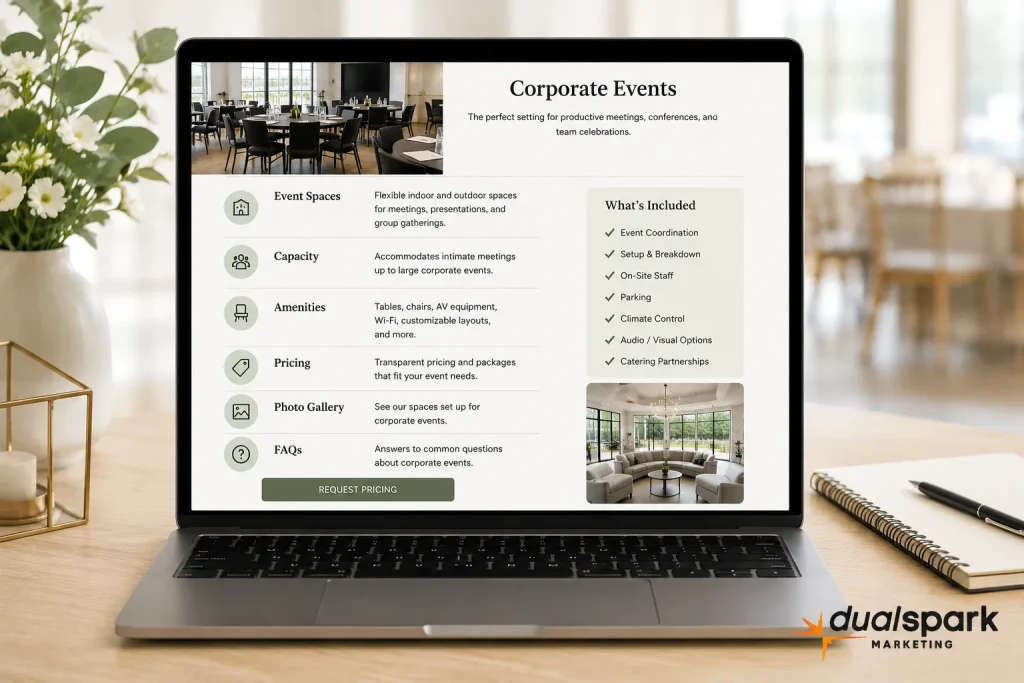
Create a Corporate Events Page
Corporate planners often approach venue selection differently than couples.
They may need clear answers, fast pricing, dependable technology, easy parking, and a professional planning process.
Your corporate event page should discuss:
- Meetings
- Training sessions
- Networking events
- Employee dinners
- Award ceremonies
- Product launches
- Holiday parties
- Fundraisers
Include information about seating layouts, presentation needs, catering, internet access, parking, branding, accessibility, and weekday availability.
Use a professional tone while still showing the personality of your property.
Create Pages for Private Parties That Fit Your Business
A private party page may support birthdays, anniversaries, graduations, retirement parties, and family celebrations.
However, one page may not serve every event equally.
Create individual pages when the event type has enough demand, unique needs, and content to support a full page.
For example, a quinceañera may require information about:
- Large guest counts
- Dance floors
- Formal entrances
- Dressing areas
- Catering
- Decorations
- Music
- Security
- Photography
- Rental time
That deserves more detail than a general sentence under “Private Parties.”
Avoid Creating Thin Event Pages
Separate pages only help when they provide real value.
Do not create ten pages that repeat the same paragraphs with a different event name.
A weak page may say:
“Our venue is perfect for birthday parties. Contact us today.”
Then another page says:
“Our venue is perfect for baby showers. Contact us today.”
These pages do not answer questions or help visitors make decisions.
Each page should include event specific information, original wording, relevant photos, appropriate amenities, and useful FAQs.
If you cannot write a meaningful page for an event type, include it on a broader page until you develop more content.
Do Not Compete With Your Own Pages
Creating separate pages requires a clear structure.
You do not want several pages targeting the same search intent with nearly identical content.
For example, these pages may overlap too much:
- Private event venue
- Party venue
- Special event venue
- Celebration venue
Choose a primary purpose for each page.
A clear structure might include:
- Weddings
- Micro Weddings
- Rehearsal Dinners
- Showers
- Corporate Events
- Private Parties
Each page should target a distinct audience and answer different questions.
Use Internal Links to Connect Related Pages
Your event pages should connect with the rest of your website.
A corporate event page may link to:
- Amenities
- Floor plans
- Catering information
- Pricing
- Contact
- Availability
A micro wedding page may link to:
- Wedding packages
- Ceremony spaces
- Photo gallery
- Real weddings
- Frequently asked questions
- Schedule a tour
Internal links help visitors continue their research and help search engines understand your website structure.
You can also link between related event pages when it benefits the visitor.
For example, a rehearsal dinner page may link to the wedding page, while a corporate event page may link to the holiday party section.
Match Your Calls to Action to the Event Type
Not every visitor needs the same next step.
A couple planning a wedding may want to schedule a private tour.
A corporate planner may want a proposal.
A parent planning a shower may want to check availability and pricing.
Use calls to action such as:
- Schedule a Wedding Venue Tour
- Request Corporate Event Pricing
- Check Shower Availability
- Ask About Micro Wedding Packages
- Plan Your Private Event
- Request a Custom Event Proposal
Specific calls to action make the next step feel more relevant.
Separate Event Pages Can Support Google Ads
Event specific pages can improve your paid advertising strategy.
If you run an ad for corporate event venues, send visitors to the corporate event page rather than the homepage.
If you advertise bridal shower rentals, send visitors to the shower page.
The search, ad, and landing page should match.
A visitor searching for a corporate meeting space should not land on a page dominated by wedding ceremony photos and bridal messaging.
A more relevant page can help visitors find answers faster and may generate better inquiries.
Track Results by Event Type
Separate pages make it easier to understand which services generate interest.
You can track:
- Page visits
- Form submissions
- Phone calls
- Pricing requests
- Tour requests
- Availability checks
- Booked events
- Revenue by event type
Use a separate form, form field, or tracking source for each page.
Do not judge success by traffic alone. A page with fewer visitors may still generate profitable bookings.
Common Mistakes Wedding Venues Make With Event Pages
Listing Every Event on One Page
A general list does not provide enough detail for each audience.
Copying the Same Content
Each page should explain the needs, layouts, amenities, and rental options that apply to the event.
Creating Pages for Events You Do Not Want
Only promote events that fit your venue, operations, and business goals.
Using Only Wedding Photos
Show visitors how the property looks during the type of event they want to plan.
Hiding Rental Information
Give visitors enough information to understand the general rental structure and what the venue includes.
Forgetting Weekday Availability
Corporate events, showers, and private celebrations can help fill dates that weddings do not.
Using the Same Call to Action Everywhere
Match the next step to the person planning the event.
Failing to Track Bookings
Measure inquiries and revenue from each event type so you know which pages deserve more attention.
Frequently Asked Questions About Separate Wedding Venue Event Pages
Does a wedding venue need a separate website page for every event type?
A wedding venue should create separate pages for the event types it actively wants to book and can explain in useful detail. You do not need a page for every possible occasion. Focus on events that fit your property, generate real demand, and support your business goals.
For example, separate pages may make sense for weddings, micro weddings, rehearsal dinners, showers, corporate events, and private parties. If two event types use the same space, package, policies, and planning process, you may combine them on one stronger page instead of creating two thin pages.
Can separate event pages help a wedding venue improve SEO?
Yes. Separate event pages can help search engines understand the different services your venue provides. They also give your website a better chance to appear for specific searches such as corporate event venues, bridal shower venues, rehearsal dinner venues, or micro wedding venues.
The pages must contain original and useful information. Simply copying one page and changing the event name will not create a strong SEO strategy. Each page should address the needs, questions, amenities, and booking process that apply to that event.
Which event pages should a wedding venue create first?
Start with the events that already produce inquiries, bookings, or strong revenue opportunities. Weddings should remain the primary page when they represent your main business. You may then add pages for micro weddings, rehearsal dinners, showers, corporate events, or private parties.
Review your booking history, open dates, local demand, available photos, and current packages before deciding which pages to build first. It usually makes more sense to create a few complete pages than many weak ones.
What should each wedding venue event page include?
Each event page should include a clear introduction, relevant spaces, guest capacity, event specific amenities, rental options, original photos, pricing guidance, frequently asked questions, and a clear call to action.
The page should answer the main questions a visitor has before contacting your venue. It should also explain why your property works well for that particular event rather than relying on general statements that could apply to any event space.
Can a wedding venue combine similar event types on one page?
Yes. Combining related events can work well when they share the same audience, rental structure, amenities, and venue setup. For example, bridal showers and baby showers may fit on one detailed shower venue page.
However, you should separate event types when the visitor needs different information. Corporate meetings, weddings, and birthday parties usually require different messaging, photos, pricing details, amenities, and calls to action.
Should each event page include pricing information?
Yes. Each page should give visitors some useful pricing guidance. You may list starting rates, explain available rental periods, describe package options, or link to a dedicated pricing page.
You do not need to publish every final cost if pricing depends on the date, guest count, rental hours, or services selected. However, making every visitor contact you for basic information can reduce trust and lead to more unqualified inquiries.
Can separate event pages help a venue book more weekday events?
Yes. Dedicated pages allow you to promote events that naturally fit weekdays, mornings, evenings, or shorter rental periods. Corporate meetings, training events, showers, networking events, rehearsal dinners, and celebrations of life can help fill dates that receive less wedding demand.
The page should clearly explain weekday availability, rental length, capacity, included amenities, and any packages designed for those events. This helps visitors understand that your venue offers more than weekend weddings.
How can a wedding venue prevent event pages from competing with one another?
Give every page a distinct purpose, audience, and search intent. Avoid creating several pages that target nearly identical terms such as private events, special events, parties, and celebrations without meaningful differences.
Use unique titles, headings, content, photos, FAQs, and calls to action. Each page should answer different questions and clearly explain which visitor it serves. This creates a cleaner website structure and reduces unnecessary overlap.
Final Thoughts: Turn More Event Searches Into Qualified Bookings
Your venue may serve several types of events, but each audience needs different information before they feel ready to reach out. Separate event pages help you speak directly to couples, corporate planners, families, and other clients while showing how your spaces, amenities, and rental options fit their needs.
These pages can also improve your website structure, support stronger SEO, and help you promote weekday dates, shorter rentals, and slower seasons more effectively. When each event page has a clear purpose, useful details, original photos, and a focused call to action, your website can attract better inquiries instead of forcing every visitor through one general events page.
At Dual Spark Marketing, we help wedding venues build websites and SEO strategies designed to generate qualified leads and more booked events. If your current website places every service on one page, we can help you create a stronger structure that gives each event type the attention it deserves. Contact us today to discuss how dedicated event pages can help your venue increase visibility and generate more booking opportunities.