If you own a wedding venue, your goal is simple. You want more couples visiting your website and more tour requests coming in.
But what happens when someone clicks on your website from Google and then quickly goes back to search results?
That behavior is called pogo sticking.
And it can quietly hurt your SEO rankings.
In this guide, we will explain:
- What pogo sticking is
- Why it happens
- How it affects SEO
- Why wedding venue websites are at risk
- How to fix it
Let’s break it down in simple terms.
What Is Pogo Sticking?
Pogo sticking happens when someone searches on Google, clicks on a result, quickly leaves that website, and returns to the search results to click another option.
Think of it like jumping back and forth between results.
For example:
A couple searches “wedding venue in Orlando.”
They click your website.
Within a few seconds, they hit the back button.
Then they click another venue.
That quick return to Google is pogo sticking.
It signals that your website did not meet their expectations.
Why It Is Called Pogo Sticking?
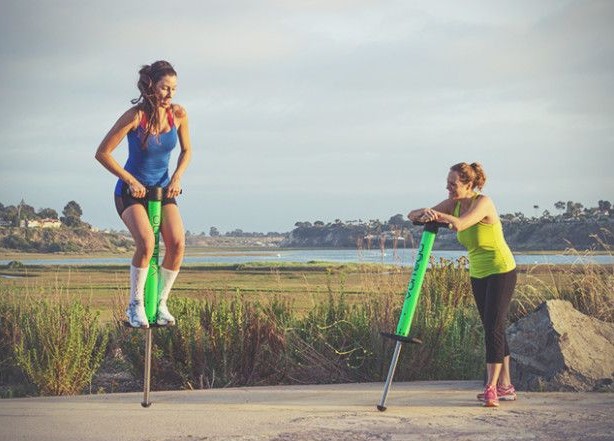
The term comes from a pogo stick toy. You bounce up and down quickly.
In SEO, the user is bouncing between search results.
Google tracks user behavior patterns. While Google does not publicly confirm every ranking factor, user satisfaction is clearly important.
If many people click your website and quickly return to search results, it suggests your page is not delivering what users want.
Why Pogo Sticking Hurts SEO
Google’s main goal is to give users the best possible result.
If users keep returning to search results after clicking your site, Google may assume:
- Your content is not relevant
- Your page did not answer the question
- Your website is hard to use
- Your site loads too slowly
Over time, this can lower your rankings.
Google wants to show pages that keep users engaged. If another wedding venue keeps visitors longer and provides better information, that site may move above you.
Pogo Sticking vs Bounce Rate
Many people confuse pogo sticking with bounce rate.
Bounce rate simply means someone visited one page and did not click to another page. They may still have read your content for several minutes.
Pogo sticking is different.
It specifically refers to someone going back to Google right away to choose another result.
That quick exit is what creates the problem.
Why Wedding Venue Websites Are at Risk
Wedding venue websites are especially vulnerable to pogo sticking because couples are making emotional and financial decisions quickly. If your website does not immediately meet their expectations, they will not hesitate to click back to Google and try another venue.
Below are the most common reasons this happens.
Slow Loading Pages
Wedding venue websites often use large, high resolution images and videos to showcase the property. While beautiful visuals are important, oversized files can dramatically slow down your website. If your homepage takes more than a few seconds to load, couples may leave before they ever see your space.
Speed matters more than many venue owners realize. Engaged couples are browsing multiple venues at once. If yours feels slow or unresponsive, they assume the experience will be frustrating and move on. Compressing images, limiting heavy animations, and using reliable hosting can make a big difference in keeping visitors on your site.
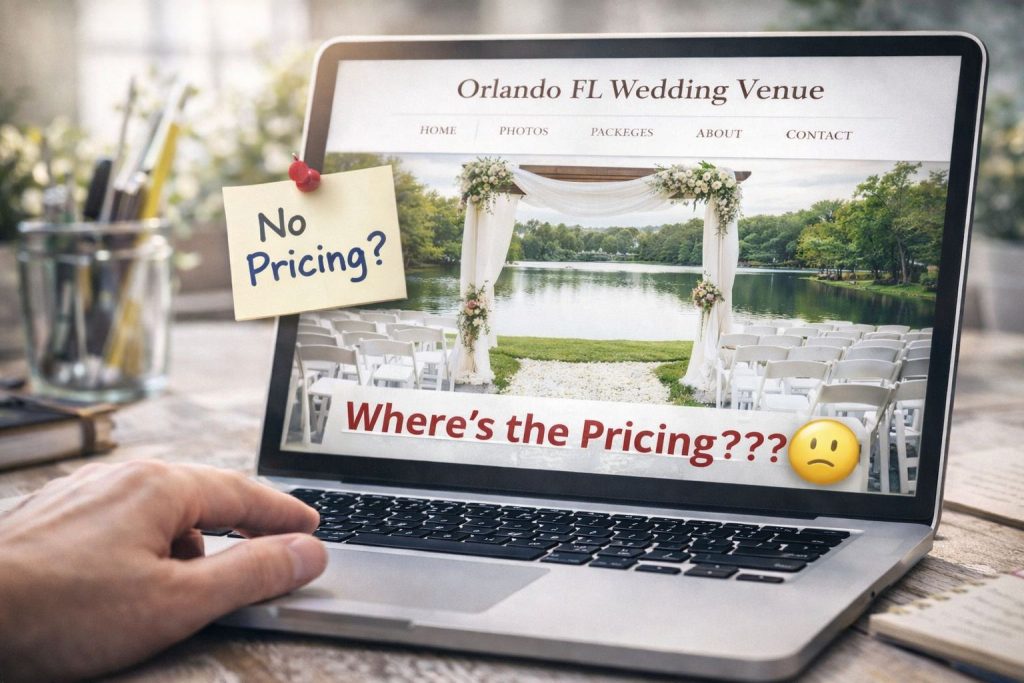
No Clear Pricing Information
Many couples begin their search with a budget in mind. If they land on your website and cannot find even a starting price range, they may quickly return to search results to find a venue that is more transparent.
This does not mean you need to post every detail of your packages. Even a simple starting price or a clear invitation to view pricing can help. When couples feel like they are getting honest information upfront, they stay longer and explore more pages instead of bouncing back to Google.
Weak Headlines
Your headline is one of the first things visitors see. If it does not clearly explain what you offer and where you are located, people can become confused within seconds.
A strong headline should quickly answer three questions:
- What type of venue are you
- Where are you located
- What makes you special
For example, “Waterfront Wedding Venue in Tampa with Indoor and Outdoor Ceremony Space” is clear and specific. When visitors instantly understand they are in the right place, they are far less likely to leave.
Cluttered Design
Too many pop ups, auto playing videos, flashing elements, or complicated menus can overwhelm visitors. Couples should not have to work hard to find your gallery, pricing, or contact page.
Clean design builds trust. Simple navigation keeps users calm and focused. If your website feels chaotic, visitors may assume working with your venue will feel the same way. A streamlined layout helps guide couples through your site instead of pushing them away.
Content That Does Not Match Search Intent
Search intent means understanding what the user actually wants when they type a phrase into Google.
If someone searches “outdoor wedding venue in Orlando” but your page mostly shows indoor ballroom photos, they may feel disappointed. Even if you do offer outdoor space, it needs to be clearly featured and explained.
Your content must match the exact promise of the search query. When visitors immediately see photos, descriptions, and details that align with what they searched for, they stay longer. When expectations are not met, pogo sticking happens.
How to Reduce Pogo Sticking
The good news is that pogo sticking is often a fixable problem. Small improvements in clarity, speed, and structure can make a major impact on engagement and rankings.
Here are the most effective ways to reduce it.
1. Improve Page Speed
Fast websites create better first impressions. Compress images before uploading them and avoid placing large video files at the top of your homepage. Choose a hosting provider that prioritizes performance.
Even shaving one or two seconds off your load time can significantly reduce early exits. When couples can view your venue quickly and smoothly, they are more likely to stay and explore.
2. Match Search Intent Clearly
Every page should align directly with the keyword it targets. If the page is optimized for “barn wedding venue in North Florida,” then the barn should be the star of the page.
Include:
- Clear photos of the barn
- Descriptions of the ceremony and reception setup
- Guest capacity details
- Seasonal advantages
When your page delivers exactly what the visitor expected, you build trust instantly and reduce the urge to go back to search results.
3. Add Clear Calls to Action
Visitors should always know what to do next. If there is no clear next step, they may leave.
Strong calls to action include:
- Schedule a tour
- Check availability
- View pricing
- Download our brochure
Place these buttons in visible areas and repeat them throughout the page. Clear direction keeps visitors moving forward instead of bouncing away.
4. Provide Helpful Content
Photos are important, but they are not enough on their own. Couples want information.
Include:
- Frequently asked questions
- Rain plan details
- Package inclusions
- Real wedding stories
- Vendor recommendations
Helpful content keeps visitors engaged and answers objections before they arise. The longer couples stay reading and exploring, the stronger your engagement signals become.
5. Make Navigation Simple
Your website menu should feel intuitive. Couples should not have to search for important pages.
Core pages should be easy to find:
- Gallery
- Pricing
- About
- Real weddings
- Contact
Clear navigation improves user experience and reduces frustration. When visitors feel guided rather than lost, they stay longer.
6. Build Trust Quickly
Trust reduces hesitation. When couples trust you, they are more willing to explore your site.
Add:
- Recent reviews
- Testimonials
- Awards
- Press mentions
- Vendor partnerships
Social proof reassures visitors that your venue is reputable and experienced. That confidence reduces the urge to go back to Google and keep searching.
The Bottom Line
Pogo sticking often happens within seconds. That means your first impression must be strong.
Pogo sticking usually is not a traffic problem. It is a structure and clarity problem. When your website loads fast, clearly matches what couples are searching for, and guides them naturally toward scheduling a tour, they stay longer and engage more.
That is exactly what our wedding venue website platform at Dual Spark Marketing is built to do. We design sites specifically for wedding venues with strong local SEO structure, fast load times, clear messaging, and conversion focused layouts that keep couples exploring instead of clicking back to Google. If you want fewer quick exits and more tour requests, having the right foundation in place makes all the difference.