Your outdoor ceremony space may bring couples to your website. Your rain plan can help them decide whether they feel comfortable booking.
A couple can love your garden, waterfront, or ceremony lawn and still hesitate over one question: What happens if we cannot use it?
“We have an indoor option” starts the conversation. It rarely finishes it. Couples still need to understand where their guests will sit, whether the reception setup changes, who handles the move, and whether they will pay more.
If your website leaves those details unclear, your team must explain them during every inquiry and tour. Some couples may never get that far. They may keep looking for a venue that makes the alternatives easier to understand.
At Dual Spark Marketing, we encourage wedding venues to answer the questions that stand between interest and a booking. A clear wedding venue rain plan gives couples useful information before they commit. It also helps your website communicate the full value of your property.
What Is a Wedding Venue Rain Plan?
A wedding venue rain plan explains how your venue will adjust an outdoor wedding when weather prevents you from using the planned space. It identifies the alternative location, the layout, the decision process, and the people responsible for making the change.
For couples, the plan should answer a practical question: What would our wedding look like if we needed the backup option?
For your team, it should connect the promises you make during sales with the work you can actually deliver.
You do not need to publish every internal task on your website. Couples do need an accurate overview of what they can expect. Your staff can keep detailed setup instructions, vendor contacts, and operating procedures in a separate event plan.
Before you write marketing copy, confirm that your alternative works for the weddings you sell. A room that looks suitable in a photo may require a very different arrangement once you add guest seating, an aisle, and the equipment vendors need.
Why Should Couples Understand the Rain Plan Before Booking?
Couples choose more than a ceremony backdrop. They choose a place where they expect to host an entire celebration.
When you explain the alternative early, you help them evaluate the venue as a complete option. They can decide whether they like both settings and whether the arrangements fit their priorities.
Imagine two hypothetical venue tours. One ends with a quick mention that the reception room can “work as a backup.” The other includes a walk through that room, photos of a ceremony setup, and an explanation of where guests gather while staff prepare for dinner.
The second tour gives the couple more information to use in their decision. It does not require them to imagine a plan your team has not shown them.
Early explanations also reveal mismatches. A couple who wants an outdoor ceremony under every circumstance needs to understand your limits before signing. Finding that difference during the sales process gives everyone a chance to make a better decision.
Why Is “We Have an Indoor Option” Not Enough?
The phrase leaves several important details open.
Does the indoor room accommodate the same guest count? Does your team need to remove reception tables? Can the couple still use their chosen ceremony backdrop? Where will guests wait during a room change?
A couple cannot answer those questions from a photo of an empty building.
Describe the actual arrangement. Name the room, explain its role, and identify any changes to the wedding schedule or setup.
For example, a hypothetical venue might explain that it uses its main hall for an indoor ceremony, then hosts cocktail hour in a separate lounge while staff arrange the reception. Another venue might hold the ceremony with guests already seated at their dinner tables.
Neither description fits every venue. Your job is to explain the version you offer, including the tradeoffs.
Our article about dedicated ceremony and reception space pages explains how those pages can give couples a clearer view of your property.
What Should Your Wedding Venue Rain Plan Explain?
Use the actual name of the space. “The Garden Room” gives couples a place they can recognize during a tour and find in your photo gallery.
Explain whether it is an enclosed room, a covered outdoor area, or another arrangement. Do not describe those options as interchangeable. Couples may have different expectations about comfort, privacy, and exposure to weather.
If the backup depends on an outside rental or a separate reservation, say so. An option that requires advance arrangements should not sound like a space your team can provide automatically.

State Capacity for the Backup Layout
Explain how many guests the space accommodates in the ceremony arrangement you offer. Do not assume the reception capacity answers that question.
Rows of chairs, an aisle, dinner tables, and vendor equipment use space differently. Couples need to know whether their expected attendance fits the alternative they would use.
If the outdoor setting accommodates more guests than the backup, disclose that difference before the couple books. Help them understand which arrangements suit their guest count rather than promising to solve the layout later.
Explain What Changes Between Ceremony and Reception
If both parts of the wedding use one room, describe how your team changes it.
Couples will want to know whether guests leave the space, how long the change generally requires under your operating plan, and where cocktail hour takes place. They may also need to know whether they can see the room while staff work.
Make sure your sales explanation reflects the staffing and access your packages include. Do not promise a quick change based on a setup your team has never carried out.
Identify Who Handles the Work
Clarify which tasks your venue staff complete and which tasks belong to the planner, florist, rental company, or other vendors.
Moving venue chairs differs from rebuilding a floral installation. A couple may assume your team handles both unless you explain the difference.
Confirm responsibilities with the people involved. Then give couples a simple overview and address the event specific details during planning.
Explain What the Plan Includes and What Costs Extra
State whether the package includes backup space, additional setup labor, and any standard furniture changes.
If the alternative requires extra rentals, vendor services, or other charges, explain how couples receive those estimates and when they need to approve them.
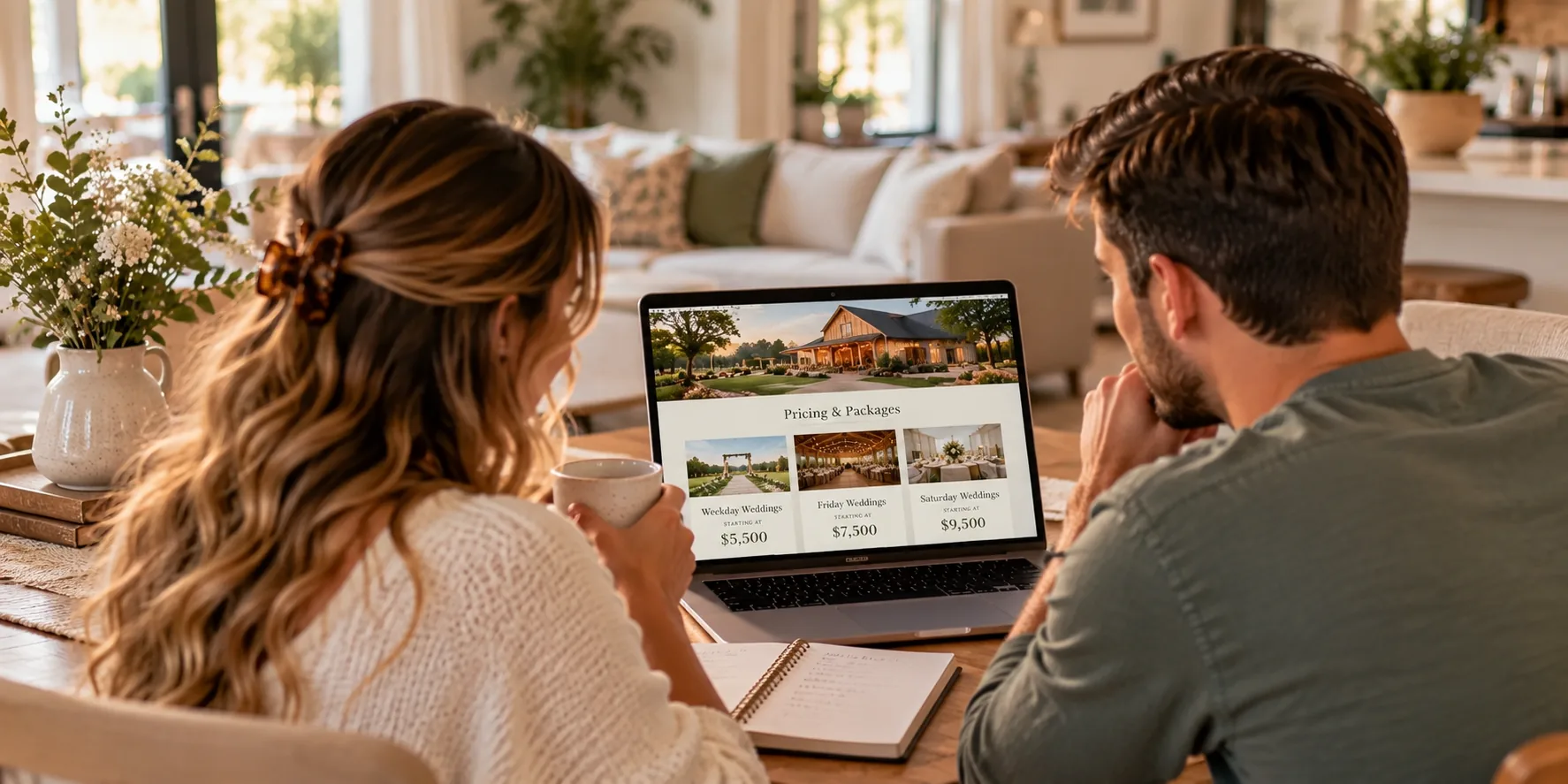
An unclear price can make a useful option feel uncertain. Your pricing information before the tour should help couples understand the likely scope of their venue costs, including conditions that change them.
Who Makes the Weather Decision, and When?
Couples should understand your decision process before weather becomes an immediate concern.
Explain who communicates with them, who has authority to approve a change, and when your team needs a decision to complete the setup. Some venues may involve the couple and planner in that process while reserving certain decisions to venue management.
Your timing should reflect the work involved. Moving chairs, adjusting vendor deliveries, and changing a ceremony setup take preparation. Avoid promising that couples can wait until the final moment unless your team can support that promise.
Also explain what happens if conditions change after the planned decision time. Your website can give a short overview, while your event planning materials provide the details.
Keep the distinction between rain arrangements and emergency procedures clear. Do not describe a covered patio or tent as suitable for every weather condition. Have the appropriate professionals establish your property’s weather procedures, then make sure your marketing reflects those limits.
How Can Photos Make Your Backup Plan Easier to Understand?
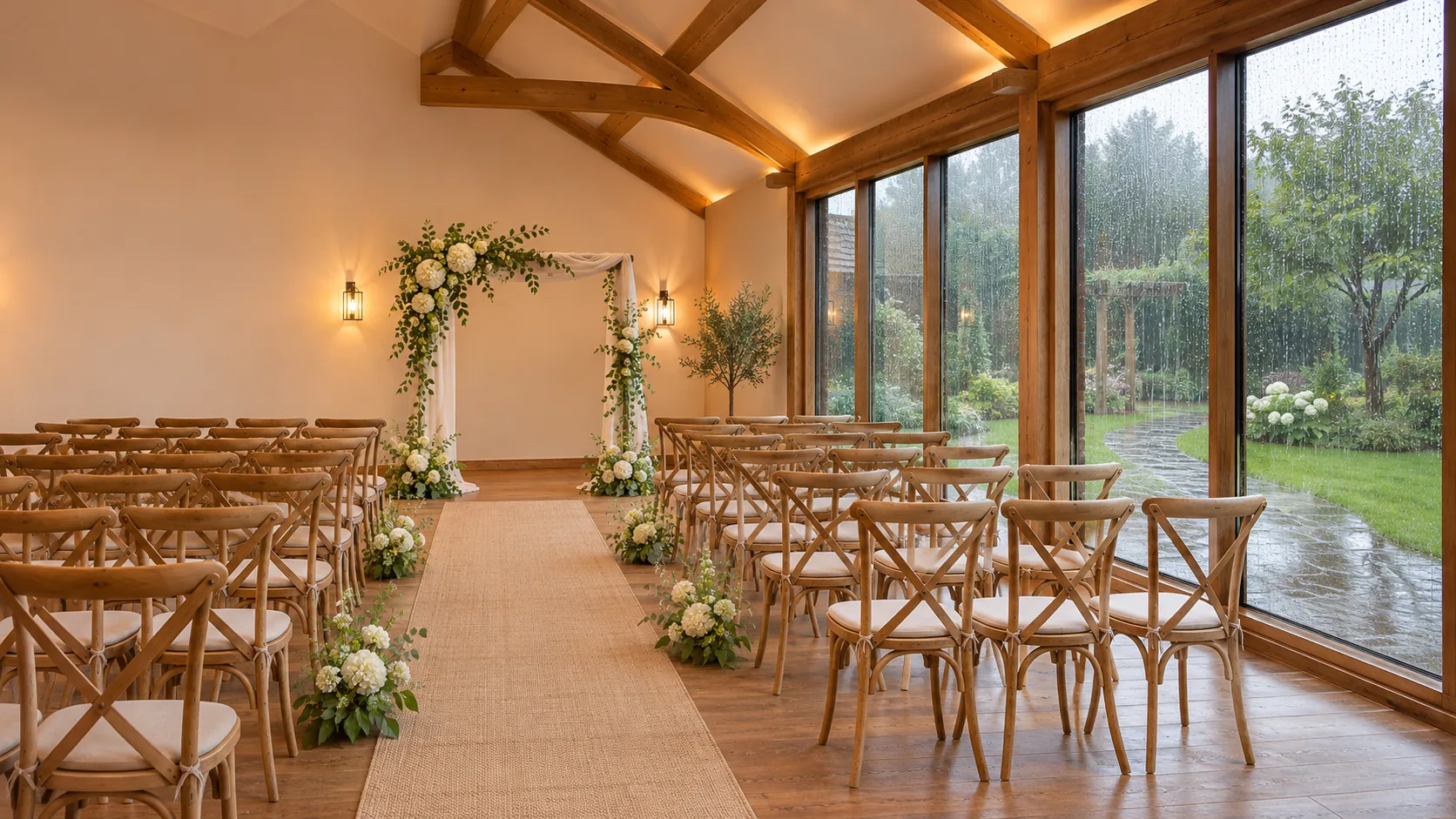
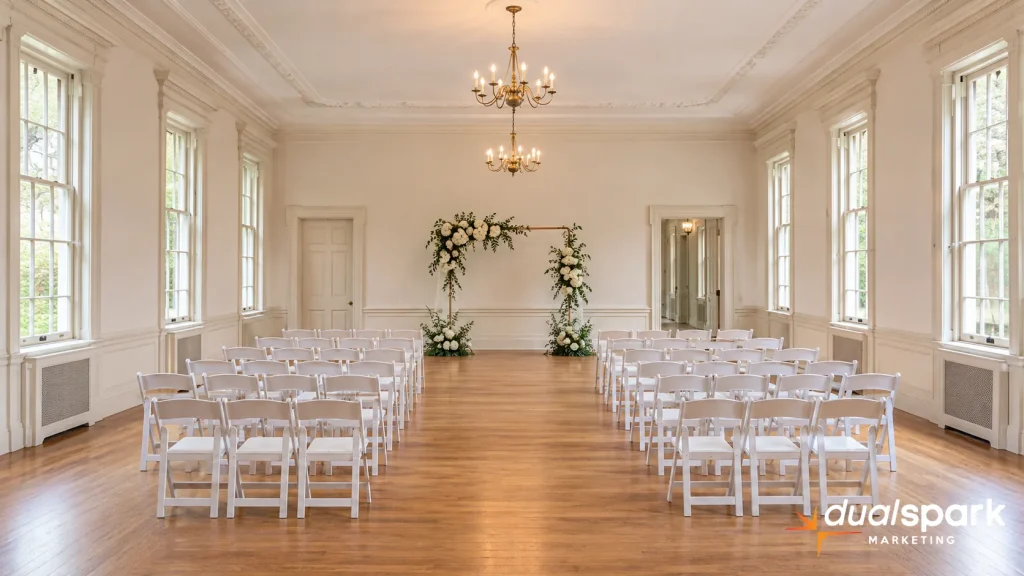
Show the alternative as a wedding space. Couples should not have to imagine a ceremony inside an empty hall or a room full of stored furniture.
Photograph a setup that represents what your package can provide. Show the aisle, seating, ceremony backdrop, and relationship between the ceremony area and other spaces.
A wide image helps couples understand the room. A second view from the couple’s ceremony position can show what they will see facing their guests.
Label the Setup Accurately
If the image includes outside rentals, upgraded chairs, or special decor, identify those features in the caption or nearby copy.
A beautiful photo can create the wrong expectation when it shows a setup that requires a different budget.
Use photos from your actual venue when presenting your own backup option. Concept images may help illustrate a general marketing article, but they should not serve as evidence of a space or service your venue offers.
Show the Transition Between Spaces
If guests move to a lounge during a room change, show that lounge. If a covered walkway connects two areas, show the connection.
These details help couples picture the flow of the day. They also answer questions that a collection of close up decor photos cannot.
You can use real wedding blog posts to explain how a couple used the indoor setting, with permission to share their story and images.
How Do Floor Plans Support Your Rain Plan?
A floor plan helps couples understand how the alternative fits together.
Show the ceremony seating, aisle, entrance, and areas you reserve for vendors. If staff later prepare the same room for dinner, provide a separate reception layout rather than asking couples to interpret both arrangements at once.
Keep the drawing clear and accurate. Label the arrangement with the guest count it represents so couples do not assume every layout works at your maximum capacity.
For example, a plan showing 80 ceremony seats does not tell a couple how you would arrange 130 guests. Your team should explain the layout that applies to their event.
Our guide to wedding venue floor plans covers how these visuals can help couples assess spaces before a tour.
Where Should You Explain Your Rain Plan on Your Website?
Put the answer where couples already look for information about your outdoor spaces. Do not make them search your entire website for it.
Start with your ceremony page. Include a short explanation, a useful photo, and a link to more detail when necessary.
Your other pages can support that information without repeating the same long passage everywhere:
- Amenities page: Explain the backup space and related features your package includes.
- FAQ page: Answer direct questions about weather decisions, room changes, and costs.
- Pricing page: Identify charges or package differences that affect the alternative.
- Gallery: Include clearly labeled indoor ceremony examples.
- Tour information: Let couples know they can see both their preferred space and the backup.
A dedicated rain plan page can make sense when you have several outdoor locations, multiple alternatives, or a process that needs more explanation. A straightforward venue may only need a strong section on its ceremony page.
Choose the structure that makes the information easiest to find. Connect related pages with descriptive links, and update the main explanation whenever your spaces or policies change.
How Can Rain Plan Content Support Wedding Venue SEO?
Clear rain plan content gives your website a useful answer to a specific planning question.
A couple might search for “wedding venues with indoor ceremony options” or ask, “What happens if it rains at an outdoor wedding venue?” A page that describes your actual spaces can help them assess whether your property meets their needs.
Include your location naturally, name the spaces, and explain the alternative in complete sentences. A vague phrase such as “perfect in any weather” tells readers little about the property.
For search engines and AI search platforms, aim for information that makes sense on its own. A useful paragraph identifies the venue, the outdoor space, the backup location, and any important capacity or package limits.
Publishing that information does not guarantee a ranking or an AI mention. Its immediate value is that couples can understand the answer. Your wedding venue FAQ content can support the topic with direct questions and clear explanations.
How Should Your Team Present the Rain Plan During Tours?
Make the alternative a normal part of the tour.
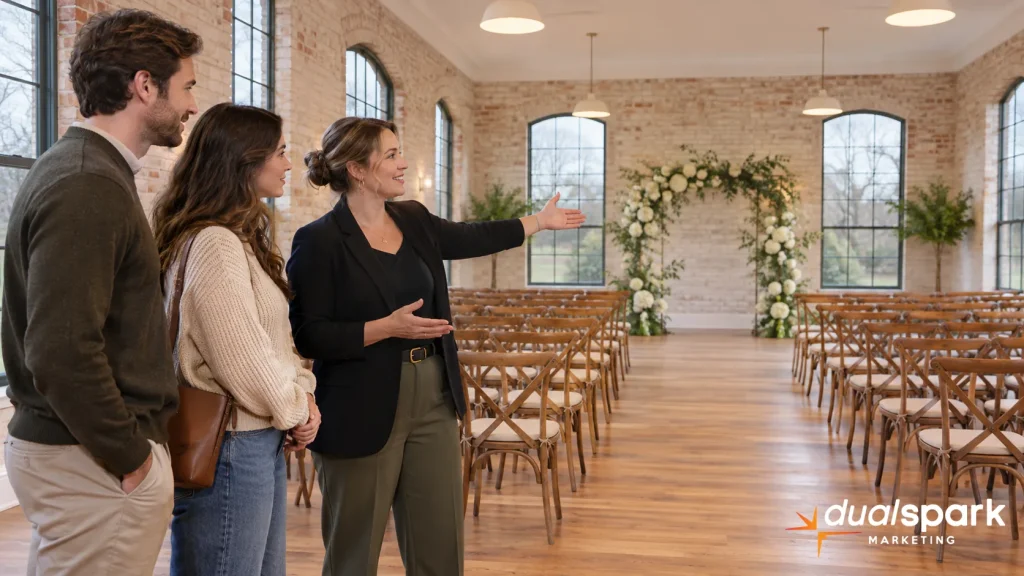
Walk couples through the preferred ceremony location, then show them the backup while the comparison remains fresh. Explain how seating, decor, timing, and guest movement would change.
Ask what matters most to them about the ceremony. One couple may care about natural light. Another may need a layout that keeps all guests in one room. Their answers help your team explain the relevant details.
Use the same names, capacities, and package information that appear on your website. If a salesperson gives one answer and the planning team gives another, the couple must figure out which version to trust.
After the tour, include a link to the rain plan information in your follow up. Couples may share it with a planner or family member who did not attend. A clear written explanation helps that conversation continue accurately.
What If Your Venue Has a Limited Backup Option?
Explain the limits honestly and early.
Some outdoor venues do not have an enclosed ceremony room. Others have a smaller indoor space or rely on rentals that require advance booking.
Describe what your venue can provide, what couples need to arrange separately, and the deadlines that affect those choices. Avoid using “indoor backup” to describe an arrangement your team cannot guarantee.
If your alternative only accommodates smaller celebrations, make that clear alongside your capacity information. If certain layouts require changes to the reception, explain those changes before couples commit.
Marketing can help you communicate your offer. It cannot create an alternative your property does not have.
Accurate information may lead some couples to choose another venue. It also gives suitable couples a clearer basis for choosing yours and helps your staff avoid promises they cannot keep.
How Can You Improve Your Rain Plan Information This Month?
Start with a short review of the questions your team already receives.
Ask the people who handle inquiries, tours, and event setup where couples get confused. Compare their answers with your website and planning materials.
Then walk through a realistic backup setup with the staff who would carry it out. Confirm the space, layout, guest movement, equipment, responsibilities, and costs before updating your sales copy.
Prioritize these actions:
- Write one accurate overview of the alternative you offer.
- Add a photo that shows the actual ceremony arrangement.
- State the capacity and package limits clearly.
- Explain the decision process and any advance deadlines.
- Link the overview from your ceremony, amenities, and FAQ pages.
- Give your sales and planning staff the same updated information.
As you use the new material, record the questions couples still ask. Those questions can reveal a missing photo, unclear sentence, or operating detail your team needs to resolve.
Frequently Asked Questions About Wedding Venue Rain Plans
What should a wedding venue rain plan include?
A wedding venue rain plan should identify the backup location, suitable guest count, setup changes, decision process, responsibilities, and any additional costs. Couples need enough detail to picture how their wedding would work if they cannot use the outdoor setting.
Start with the ceremony location and explain whether your venue offers an enclosed room, covered area, or another arrangement. Describe where guests go if staff need to prepare the same room for the reception.
Keep your public overview concise, but make sure it matches your actual services. Keep detailed vendor instructions and setup tasks in your internal event plan. Before publishing the explanation, ask your sales and operations staff to review it together so both teams promise the same experience.
Should wedding venues show their rain plan on the website?
Wedding venues should post their rain plan on their website so couples can evaluate alternatives before scheduling a tour or signing a contract. Hiding the information until later leaves a major planning question unanswered.
Place a useful overview on your ceremony page and include a photo of the actual backup setup. State the relevant capacity, explain any room changes, and identify costs or arrangements that depend on the package.
You can answer related questions on your FAQ page and link to the main explanation. Avoid copying the same lengthy passage onto every page. Give couples a clear path to one current answer, then use the tour to show the space and discuss the details that apply to their wedding.
How can a venue explain its rain plan without making couples worry?
A venue can explain its rain plan calmly by presenting the alternative as a normal part of understanding the property. Focus on what couples can expect rather than describing every weather problem that might occur.
Show the space in a welcoming ceremony arrangement. Explain how guests move through the day, who communicates changes, and what the package includes. Specific details give couples something concrete to consider.
Avoid promises such as “weather will never affect your wedding.” Your team cannot control conditions. Instead, explain the arrangements you can deliver and the limits that apply. Invite couples to see both ceremony options during their tour so they can decide whether they feel comfortable with either setting before they book.
Should a wedding venue charge extra for using the rain backup?
A wedding venue should base any rain backup charge on its package structure and the work or services the alternative requires. The key is to explain the charge before couples commit.
If your base package includes the backup room and standard furniture move, state that clearly. If the plan requires extra labor, rentals, or outside services, identify what changes the price and how couples receive an estimate.
Keep vendor charges separate from charges your venue controls. Do not describe an option as included when couples must later arrange and pay for essential parts themselves. Review your website, proposals, and planning materials together so couples receive consistent information about what they purchase and what they may need to add.
What if the indoor backup holds fewer guests than the outdoor ceremony space?
If the indoor backup holds fewer guests, your venue should disclose that difference before accepting a booking that depends on the larger outdoor capacity. Couples need to understand whether your alternative fits their actual attendance.
Publish capacity for each relevant setup instead of listing one maximum number for the entire property. Show a layout that reflects the arrangement you offer, and explain any choices the guest count affects.
Do not assume your staff can find room later by adding chairs or changing aisles. Confirm workable layouts through your venue’s operating process before presenting them to couples. If you cannot provide a suitable alternative for a particular wedding, explain that limitation early so the couple can assess the property accurately.
Who should decide when a wedding moves to the backup space?
The people responsible for moving a wedding to the backup space should follow the decision process your venue establishes and explains in advance. Couples should know who communicates with them and who has final authority over venue operations.
Describe when your team needs a decision to prepare the space and coordinate vendors. Explain how you involve the couple or planner, and what happens if conditions change after that point.
Avoid letting your website, salesperson, and event manager give different answers. Review the process with everyone who discusses it. Keep routine setup decisions distinct from emergency procedures, and do not promise that couples can use an outdoor setting regardless of conditions simply because they prefer it.
Can a venue use the reception room for a rainy wedding ceremony?
A venue can use its reception room for a rainy wedding ceremony when the layout, staffing, timing, and guest arrangements support that use. The room’s existence alone does not explain how the change will work.
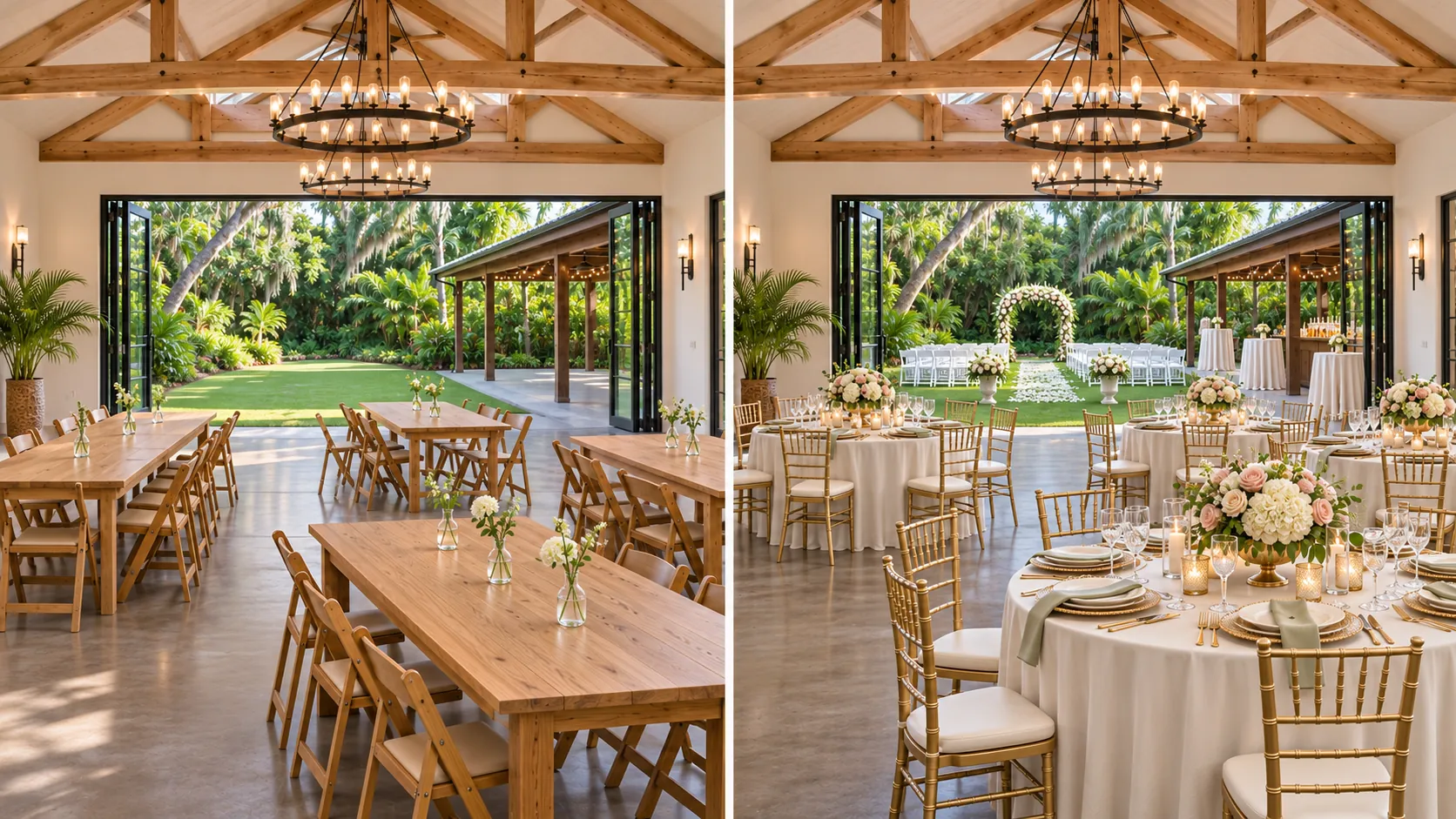
Show couples the ceremony arrangement and describe the reception setup that follows. Explain whether staff move tables, reset chairs, or keep guests at their dinner tables during the ceremony.
If guests leave the room during the change, identify where they gather and what services they can use there. Confirm responsibilities for decor, vendor equipment, and venue furniture. Give couples a realistic overview before booking, then address their specific layout and schedule during planning with the people responsible for delivery.
Can publishing a rain plan help a wedding venue receive better inquiries?
Publishing a rain plan helps couples decide whether your venue fits their needs before they inquire. That gives your team a better starting point for conversations about guest count, packages, and ceremony preferences.
For example, a couple who needs an indoor ceremony option can check whether your space accommodates their guests. Another couple may realize that your backup arrangement suits their plans better than they expected.
Treat this as an opportunity to improve clarity, rather than a promise of more leads. Track the questions couples ask, whether they visit the relevant page, and what they discuss during tours. Use those observations to improve the explanation and identify where your website still leaves uncertainty about the wedding experience.
Final Thoughts: Help Couples Feel Confident in Every Part of Your Venue
Your outdoor ceremony space may create the first impression, but couples also need to understand what happens when their original plan changes. A clear wedding venue rain plan helps them evaluate your property, ask useful questions, and book with more realistic expectations.
Show the alternative. Explain the layout, timing, responsibilities, and costs. Keep the information consistent across your website, tours, and planning process. You give couples a stronger reason to trust your venue when the details support the experience you promise.
At Dual Spark Marketing, we build wedding venue websites and marketing strategies that answer the questions couples need to resolve before booking. If your website shows the scenery but leaves important planning details unclear, contact Dual Spark Marketing. Let us help you communicate your venue’s full value and turn more qualified interest into meaningful tour requests.