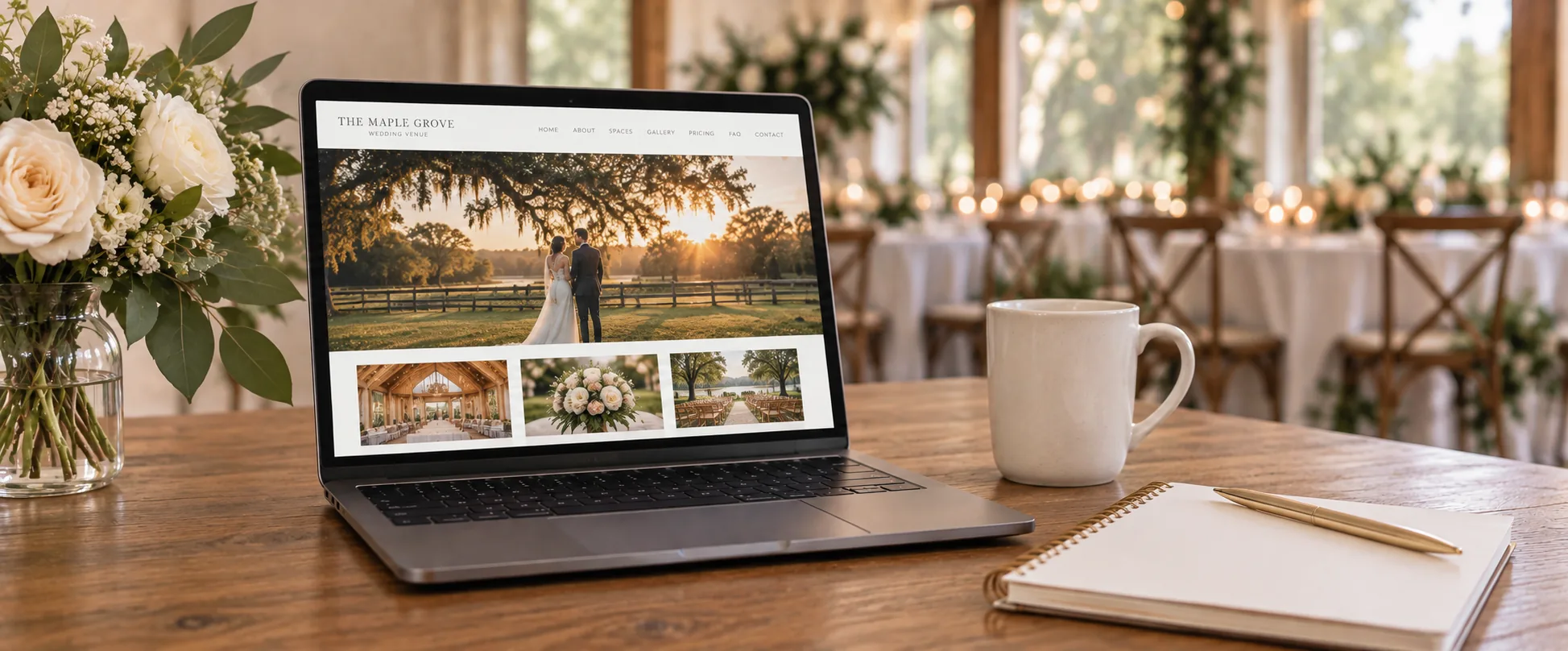
When couples visit your wedding venue website, they want to picture their wedding day at your property.
They want to see where they will exchange vows, where their guests will sit for dinner, where everyone will dance, and how the different spaces work together.
Your website should make those answers easy to find. However, many wedding venue websites try to cover everything on the homepage or rely on a large photo gallery to showcase the property.
That approach can leave couples with more questions than answers. Dedicated ceremony and reception space pages give couples a much clearer understanding of what your venue offers while giving you more opportunities to showcase the details that make your property different.
Couples Want to Understand How Your Venue Works
Your homepage has a lot to accomplish.
It needs to introduce your venue, establish what makes it different, showcase the property, build trust, and encourage couples to take the next step.
It doesn’t need to explain every detail about every space.
Think about a couple looking specifically for an outdoor ceremony location. They land on your homepage and see beautiful photos, but they can’t tell which part of the property you use for ceremonies.
Another couple wants a large indoor reception space. They see reception photos in your gallery but can’t find the capacity, table options, dance floor setup, or included amenities.
Dedicated pages solve those problems.
Instead of making couples hunt for information, you can give each major space at your venue the attention it deserves.
Give Your Ceremony Space Its Own Page
The ceremony location often plays a major role in a couple’s venue decision.
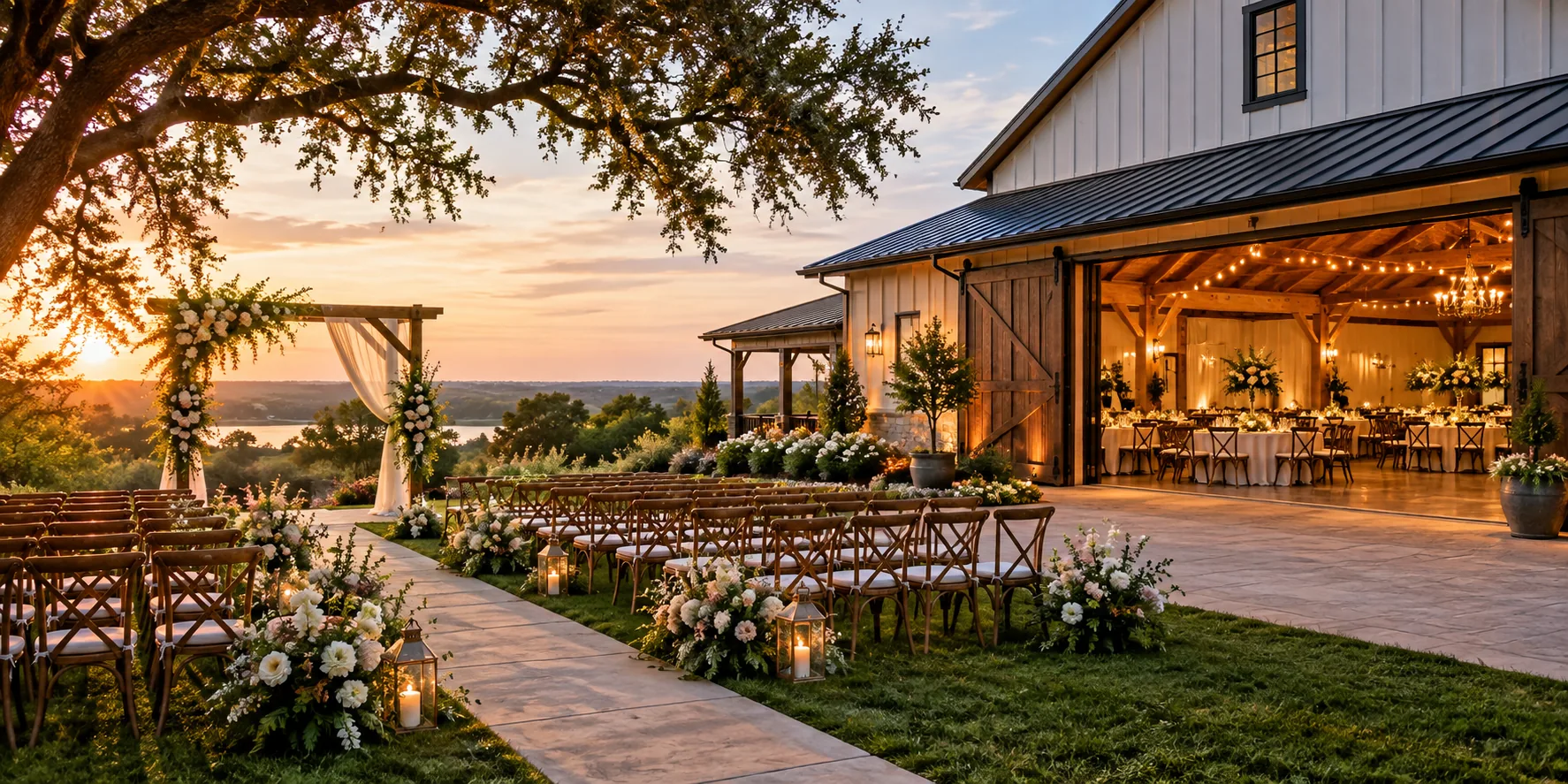
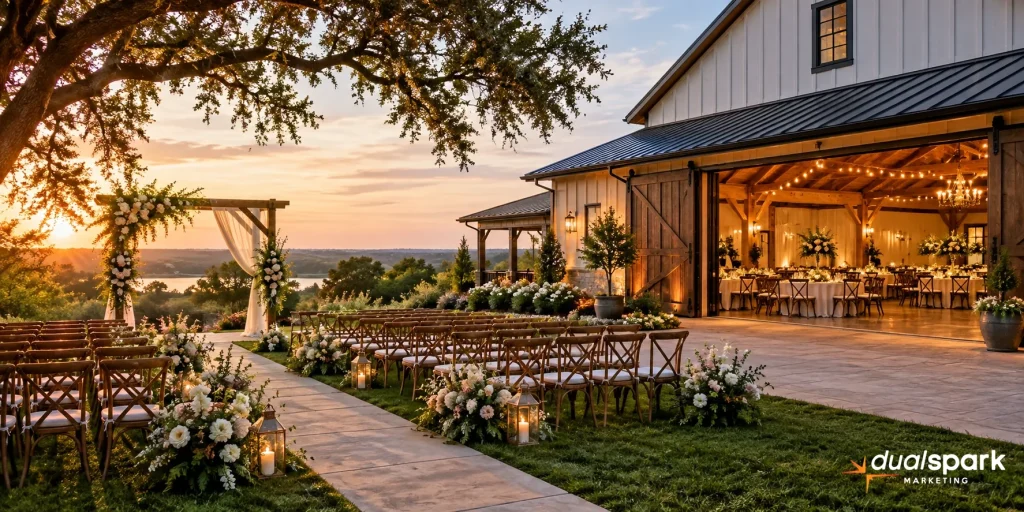
Some couples picture an outdoor ceremony surrounded by trees. Others want a waterfront setting, garden, courtyard, chapel, barn, or climate-controlled indoor space.
If your ceremony space helps sell your venue, don’t limit it to a paragraph and a few photos on your homepage.
Create a page that shows couples exactly what they can expect.
You can cover details such as:
- Indoor and outdoor ceremony options
- Maximum guest capacity
- Seating arrangements
- Chairs included with the rental
- Arbors or arches
- Aisle configurations
- Ceremony backdrops
- Accessibility
- Power for musicians or sound equipment
- Rehearsal options
- Seasonal considerations
- Rain and bad-weather backup plans
Photos should support that information.
Show the ceremony space from several angles. Let couples see the aisle, guest seating, backdrop, surrounding scenery, and different ceremony setups.
A close-up photo of a decorated arbor may look beautiful, but it doesn’t tell a couple what the entire ceremony space looks like.
Use your page to show the complete experience.
Show Couples What Your Reception Space Can Actually Accommodate
Couples usually have even more questions about the reception.
How many guests fit comfortably?
Where will everyone sit?
Is there enough room for a dance floor?
Where does the DJ or band set up?
Can couples choose between round and rectangular tables?
Where does the caterer work?
Does the venue have heating and air conditioning?
A dedicated reception page gives you enough room to answer those questions without overwhelming your homepage.
Depending on your venue, you might cover:
- Seated guest capacity
- Available table layouts
- Tables and chairs
- Dance floor space
- DJ and band setup areas
- Bar locations
- Catering areas
- Heating and air conditioning
- Restrooms
- Accessibility
- Décor options or restrictions
- Setup and cleanup
- Included reception furniture
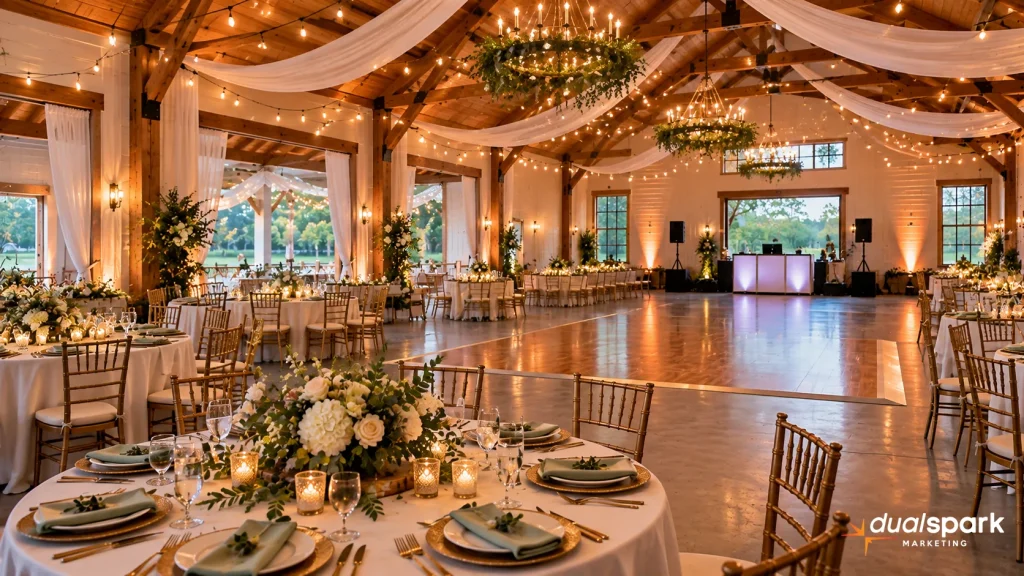
You can also show several reception layouts.
A wedding with 75 guests may use the space very differently from a wedding with 150 guests. Some couples may choose round tables and a large dance floor, while others may prefer long tables and a smaller dancing area.
Showing different configurations helps couples understand what’s possible before they ever tour your venue.
Help Couples Picture Their Entire Wedding Day
A strong wedding venue website doesn’t simply list features. It helps couples imagine spending their wedding day there.
Your website can guide them through that experience. They can start by exploring the getting-ready spaces. Then they can see where they’ll hold the ceremony. From there, they can discover the cocktail hour area before finally seeing the reception space.
That creates a much clearer picture than a gallery filled with unrelated wedding photos. Couples shouldn’t have to guess where each part of the wedding takes place.
Dedicated Space Pages Give Google More Information About Your Venue
Couples don’t always search for a specific wedding venue by name.
Many start with the type of wedding or venue they want.
They may search for things such as:
- outdoor wedding ceremony venues
- indoor wedding reception venues
- barn wedding reception venues
- garden wedding ceremony venues
- wedding venues with indoor and outdoor spaces
- wedding venues with a rain backup
- wedding reception venues for 150 guests
Your homepage can’t thoroughly cover every type of search that relates to your venue.
Dedicated space pages let you go deeper.
For example, if your venue has an outdoor ceremony lawn, you can create a page that explains the setting, capacity, seating, scenery, accessibility, included amenities, and rain plan.
That page gives Google much more specific information about your outdoor ceremony option than a single sentence on your homepage ever could.
The same idea applies to your reception space.
When you clearly explain what each space offers, search engines can better understand your venue and the types of searches your website may answer.
Ceremony and Reception Pages Can Strengthen Your Local SEO
Your space pages also let you establish where your venue is located and which areas you serve.
You don’t need to repeat your city in every paragraph.
In fact, you shouldn’t.
Instead, incorporate your location naturally.
For example, a venue near Jacksonville could explain what couples looking for an outdoor wedding ceremony near Jacksonville can expect from its property.
A reception page could discuss the advantages of having an indoor reception space in the area, particularly when weather plays a role in wedding planning.
The location should support the content, not dominate it.
You’re writing the page for couples first. Local SEO should fit naturally into that information.
Clear Information Can Also Help With AI Search
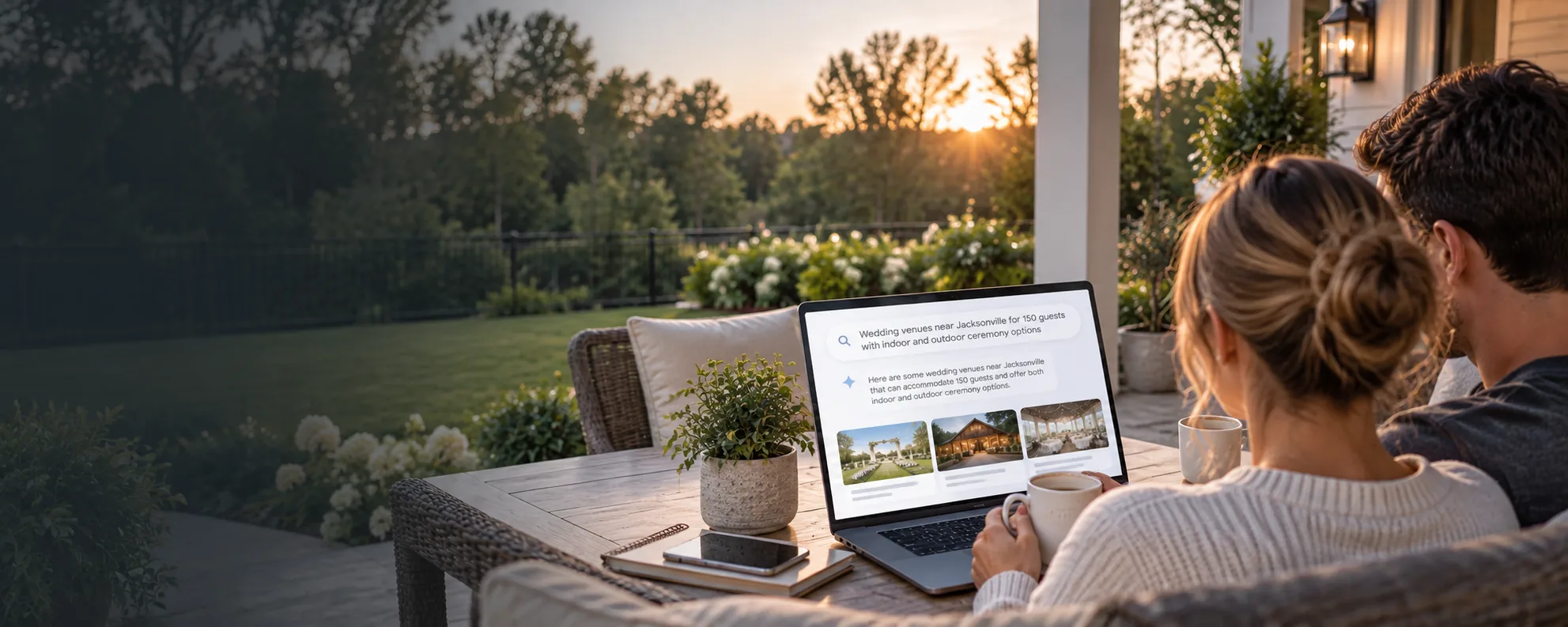
Couples now have more ways to research wedding venues. Instead of searching only with short phrases, they can ask detailed questions through Google and AI-powered search tools.
A couple might ask:
“Which wedding venues have an outdoor ceremony space and an indoor reception?”
“Which wedding venues have a backup option if it rains?”
“What wedding venues can accommodate 150 guests indoors?”
Your website needs to provide clear information if you want search systems to understand whether your venue fits those requests.
Consider the difference between these two statements:
“We offer beautiful indoor and outdoor wedding spaces.”
And:
“Our outdoor ceremony lawn accommodates up to 150 guests, and couples can move the ceremony indoors if bad weather affects their wedding day.”
The second version provides much more useful information. It identifies the ceremony space type, guest capacity, indoor option, and rain plan.
Specific information helps couples make decisions. It also gives search engines and AI systems clearer information about what your venue actually offers.
Use the Questions Couples Already Ask During Venue Tours
You don’t need to guess what information belongs on your ceremony and reception pages. Listen to the questions couples already ask during your venue tours.
If couples constantly ask what happens when it rains, put your rain plan on the website. If everyone asks whether you include tables and chairs, explain what’s included.
If couples regularly ask how many guests fit comfortably, answer that question instead of listing only your absolute maximum capacity. If people want to know whether they can use one space for the ceremony and another for the reception, explain how that transition works.
Your venue tours already tell you what couples want to know. Use those questions to create better website content and answer common concerns before couples ever arrive for a tour.
Don't Expect Your Wedding Gallery to Do All the Work
Your photo gallery plays an important role on your website, but photos alone can’t explain your venue.
A couple might see a gorgeous ceremony photo without knowing where you took it. They may see a reception with 100 guests but have no idea how many people the room can actually accommodate. They could also see an outdoor ceremony without realizing you have an indoor option available when the weather changes.
Dedicated pages give your photography context. Instead of simply showing a reception photo, explain what couples are seeing and how the space works.
How many guests can the room accommodate? What table layouts can couples choose? Where does the dance floor go? Can the room look completely different with a smaller wedding?
When you combine strong photography with useful information, your images do more than make the website look good. They help couples understand your venue.
Connect Your Ceremony and Reception Pages to the Rest of Your Website
Don’t treat your ceremony and reception pages as dead ends. Give couples an easy way to continue learning about your venue.
Your ceremony page could naturally link to your reception space, amenities, pricing, getting-ready spaces, wedding gallery, and frequently asked questions. Your reception page can connect couples to many of those same resources.
For example, after explaining that tables and chairs come with the venue rental, you can direct couples to your amenities page to see everything else you include. After discussing reception capacity, you might send couples to your pricing page to learn about available packages.
These internal links help couples find the information they need without returning to your main navigation after every page. They also help search engines understand how the different pages on your website relate to one another.
What Should You Include on a Wedding Venue Ceremony Page?
Every wedding venue operates differently, so your ceremony page should reflect your actual property, amenities, and policies. Don’t create a generic ceremony page that could describe almost any venue.
Start by describing the ceremony setting. Tell couples whether you offer an outdoor lawn, garden, courtyard, waterfront area, barn, chapel, covered area, indoor room, or multiple ceremony options.
Next, answer the practical questions couples need to know. Explain the guest capacity, seating arrangements, what’s included, accessibility, ceremony rehearsal options, and any restrictions that could affect their plans.
If you host outdoor ceremonies, clearly explain your weather backup option. Don’t simply tell couples you have a “rain plan.” Show them where the ceremony moves, explain how the process works, and include photos of the backup space when possible.
Finally, give couples a clear next step. Once they have explored the space and answered their biggest questions, make it easy to schedule a tour or check your venue’s availability.
What Should You Include on a Wedding Venue Reception Page?
Your reception page should help couples understand the space’s appearance and functionality. Start with capacity, and explain whether different seating arrangements affect how many guests you can comfortably accommodate.
Then cover what’s included with the venue rental. Explain your tables, chairs, furniture, bar areas, dance floor space, catering areas, restrooms, climate control, and other reception amenities.
Show different layouts whenever possible. Couples planning a smaller wedding may want to know whether the room still feels intimate, while couples with larger guest lists need to know whether they can fit everyone comfortably without sacrificing the dance floor.
You should also explain where entertainment typically sets up and how catering and bar service work within the space. These practical details help couples understand how their reception will function, not just how the room looks when decorated.
Frequently Asked Questions About Ceremony & Reception Space Pages
Should Wedding Venues Have Separate Pages for Ceremony and Reception Spaces?
Wedding venues should consider separate ceremony and reception pages when those spaces play distinct roles in the wedding experience. A dedicated page gives you enough room to explain each space without squeezing capacities, amenities, layouts, photos, weather plans, and other important information onto your homepage.
Separate pages also make your website easier for couples to navigate. Someone primarily interested in an outdoor ceremony can explore that space in detail, while a couple concerned about reception capacity can quickly find the information they need.
You don’t need separate pages simply to increase the number of pages on your website. Each page should provide enough unique and useful information to stand on its own. If your ceremony and reception happen in completely different areas of the property, dedicated pages often make sense. If you use the same space for both, one detailed page may provide a better experience.
What Information Should a Wedding Venue Include on a Ceremony Space Page?
A ceremony page should answer the questions couples typically ask before or during a venue tour. Start with the type of ceremony setting you offer, such as an outdoor lawn, garden, courtyard, barn, chapel, waterfront area, or indoor space.
Provide practical details such as guest capacity, seating arrangements, included chairs, ceremony backdrops, arches or arbors, accessibility, power availability, rehearsal policies, and ceremony-specific restrictions. If you offer outdoor ceremonies, clearly explain what happens when bad weather prevents couples from using their preferred space.
Use real photos to support the information on the page. Show the ceremony area from several angles and include different setups whenever possible. Couples should finish the page with a clear understanding of what holding their ceremony at your venue could look like.
What Information Should a Wedding Venue Include on a Reception Space Page?
Your reception page should help couples understand the space’s appearance and functionality. Start with guest capacity and explain whether different seating arrangements affect how many people you can comfortably accommodate.
Include information about tables, chairs, dance floor space, DJ or band locations, bars, catering areas, restrooms, accessibility, heating and air conditioning, setup times, cleanup requirements, and other amenities that affect the reception experience.
Use photos to show different table arrangements, guest counts, décor styles, and dance floor configurations. Couples should leave the page understanding how the reception space works, what’s included with their rental, and whether it fits the wedding they’re planning.
Can Dedicated Ceremony and Reception Pages Help a Wedding Venue Rank Higher on Google?
Dedicated pages can strengthen a wedding venue’s SEO when they provide substantial, original information that couples actually find useful. Simply creating more pages doesn’t automatically improve rankings.
The advantage comes from giving search engines more specific information about your venue. Your homepage may establish that you operate a wedding venue in a particular location, while a detailed ceremony page can provide additional context about your ceremony options, guest capacity, backup location, included seating, scenery, and other features.
Your reception page can do the same for reception capacity, layouts, amenities, entertainment options, and other details. This additional information gives search engines a clearer understanding of what your venue offers while creating useful resources for couples.
Can Ceremony and Reception Pages Help a Wedding Venue Appear in AI Search Results?
Detailed ceremony and reception pages can give AI-powered search systems clearer information about your venue. These systems often need specific facts to answer detailed questions from couples.
For example, someone might ask which wedding venues in a particular area offer an outdoor ceremony for 150 guests with an indoor backup option. If your website clearly states your location, outdoor ceremony capacity, and weather backup plan, a search system can use that information to determine whether your venue matches the request.
Avoid relying only on vague statements such as, “We offer beautiful spaces for weddings of all sizes.” Specific information about capacities, amenities, layouts, indoor and outdoor options, and policies gives couples better answers while providing search systems with clearer context.
Should Wedding Venues Include Guest Capacity on Ceremony and Reception Pages?
No. That could quickly turn your website into hundreds of thin pages that provide very little additional value.
You do not need one page for “wedding venues with tables and chairs” and another for “wedding venues that include tables and chairs.”
Those questions can be answered naturally on a strong amenities page.
Group related information together.
Pricing questions belong on your pricing page. Amenity questions belong on your amenities page. Capacity information can connect with your floor plans. General policies can live within your FAQs.
Create a new page when a topic deserves enough information to stand on its own.
A smaller website with strong, useful pages can create a much better experience than hundreds of pages built around slightly different versions of the same question.
Should a Wedding Venue Include Its Rain Plan on the Ceremony Page?
Yes, especially if you promote an outdoor ceremony space. Weather creates uncertainty for couples, and your website can address that concern before it becomes a reason to eliminate your venue.
Explain exactly what happens when weather prevents an outdoor ceremony. Tell couples whether you have an indoor ceremony location, covered area, reception-space backup, or another option. If the backup location has a different capacity or requires a different setup, explain that as well.
Don’t simply say that you have a “rain plan.” Couples want to know what that plan actually means for their wedding. Include photos of the backup ceremony space when possible so they can picture both options.
How Many Photos Should a Wedding Venue Include on Ceremony and Reception Pages?
There isn’t one perfect number of photos for every wedding venue. Include enough images to help couples understand the space without filling the page with repetitive photographs.
For a ceremony space, consider showing the full ceremony area, aisle, guest seating, backdrop, surrounding scenery, and several different setups. For a reception space, show wide views of the room along with different table arrangements, dance floor configurations, décor styles, and guest counts.
Choose photos based on what they show rather than trying to reach a specific number. A close-up of flowers may look beautiful, but it doesn’t help couples understand the size or layout of your reception space. Prioritize photos that help couples picture their own wedding at your venue.
What If a Wedding Venue Uses the Same Space for Both the Ceremony and Reception?
If you use the same space for both parts of the wedding, you may not need separate ceremony and reception pages. One detailed page can explain how you transform the space throughout the wedding day.
Show couples what the space looks like during the ceremony and after the reception setup. Explain when the transformation happens, who handles it, and where guests go during the transition.
This process can become a selling point when you explain it clearly. Instead of leaving couples wondering how one room handles both parts of the wedding, show them exactly how the experience works.
Should Each Ceremony or Reception Space Have Its Own Page If a Wedding Venue Offers Multiple Options?
It depends on how different the spaces are and how much useful information you can provide about each one. A venue with a garden ceremony area, waterfront ceremony location, indoor chapel, and separate ballroom may have enough unique information to justify individual pages.
However, don’t create thin pages containing one photograph and a couple of paragraphs simply because you have several spaces. Each dedicated page should help couples understand what makes that particular space different, including its capacity, setting, amenities, layout possibilities, restrictions, and weather considerations.
If several spaces don’t have enough unique information to support individual pages, combine them on a comprehensive ceremony or reception page. Build your website around what gives couples the best experience, rather than trying to reach a certain number of pages.
How Do Ceremony and Reception Pages Help Turn Website Visitors Into Venue Tours?
Couples schedule tours when they believe a venue can realistically fit their wedding. Your website needs to give them enough information to reach that conclusion.
Dedicated ceremony and reception pages answer many unanswered questions that can keep couples from taking the next step. Couples can see whether their guest list fits, understand what’s included, explore different layouts, learn about weather backup options, and picture how their wedding day could flow through the property.
The goal isn’t to replace the venue tour. Your website should give qualified couples enough information and confidence to want one. Once you’ve answered their biggest questions, make scheduling a tour easy with a clear call to action that’s easy to find as they explore your website.
Final Thoughts: Give Your Ceremony & Reception Spaces the Attention They Deserve
Your ceremony and reception spaces help sell your wedding venue. Don’t make couples search through a gallery or scroll through a crowded homepage to figure out what those spaces offer.
Give your most important spaces room to stand on their own. Show couples what each space looks like, explain how they can use it, answer common questions, and clearly share capacities, amenities, layouts, and backup plans.
The goal isn’t to create more website pages just to make your website bigger. Every page should serve a purpose and help couples decide whether your venue fits the wedding they have in mind.
At Dual Spark Marketing, we build wedding venue websites around the way couples actually research venues. We create dedicated pages for ceremony and reception spaces, amenities, pricing, FAQs, and other important parts of the venue experience so couples can find the information they need and feel confident taking the next step.
A clearer website doesn’t just show couples that your venue looks beautiful. It helps them understand why your venue could be the right place for their wedding.