If you have ever checked your Google Analytics and noticed strange websites sending traffic to your wedding venue site, you are not alone. This is called referral spam, and it can quietly damage the way you read your data.
For wedding venue owners, clean data is everything. You rely on it to understand where your leads come from, how couples find you, and what pages drive tour requests. When referral spam shows up, it creates a false picture that can lead to bad marketing decisions.
Let’s break this down in a simple way so you know exactly what is happening and how to fix it.
What Is Referral Spam?
Referral spam is fake traffic that shows up in your analytics reports as if it came from another website. These “referrals” are not real people. They are bots or automated scripts designed to hit your site or trick your tracking system.
Most of the time, these fake visits come from random domains that have nothing to do with weddings, events, or local services.
Instead of helping you, they exist for one reason:
To get your attention and make you click their link.
What Referral Spam Looks Like In Your Data
When you look inside your analytics, referral spam usually stands out once you know what to look for.
Common Signs Include:
- Traffic from websites you have never heard of
- Very high bounce rates (often 100 percent)
- Session durations of 0 seconds
- Traffic spikes that do not match your marketing efforts
- Visits from countries you do not target
For a wedding venue, your traffic should mostly come from local searches, social media, or vendor referrals. If you see traffic from random global sources or strange domain names, that is a red flag.
Why Referral Spam Is A Big Problem For Wedding Venues
At first, referral spam might seem harmless. It is just fake traffic, right?
The problem is deeper than that.
It Corrupts Your Data
You depend on analytics to know what is working. Referral spam mixes fake visits with real ones, making it harder to track actual performance.
It Inflates Your Traffic Numbers
Seeing more traffic might feel good, but if it is fake, it gives you a false sense of growth.
It Hurts Your Decision Making
If you think a certain source is sending traffic when it is not, you might invest time or money into the wrong strategy.
It Can Mask Real Issues
High bounce rates and low engagement from spam traffic can hide problems or make your website look worse than it really is.
The Two Main Types Of Referral Spam
Understanding how referral spam works will help you block it more effectively.
Ghost Spam
This type never actually visits your website. It sends fake data directly into your analytics account.
That means:
- No real visit happens
- No real user exists
- It only lives inside your reports
Bot Traffic
This type does hit your website, but it is not a real person.
Bots can:
- Trigger page views
- Create fake sessions
- Show up as real traffic
Both types damage your data in different ways, so you need to filter them out.
How Referral Spam Impacts Your Wedding Venue SEO Strategy
For wedding venues, SEO is all about attracting local couples who are ready to book tours. Referral spam gets in the way of that goal.
It Skews Your Traffic Sources
You might think a referral site is helping you when it is not.
It Breaks Conversion Tracking
If fake users never convert, your conversion rate drops. That makes your campaigns look weaker than they actually are.
It Confuses User Behavior
You lose the ability to clearly see:
- Which pages do people actually engage with
- Where users drop off
- What content drives inquiries
When your data is off, your strategy becomes guesswork.
How To Stop Referral Spam In Google Analytics
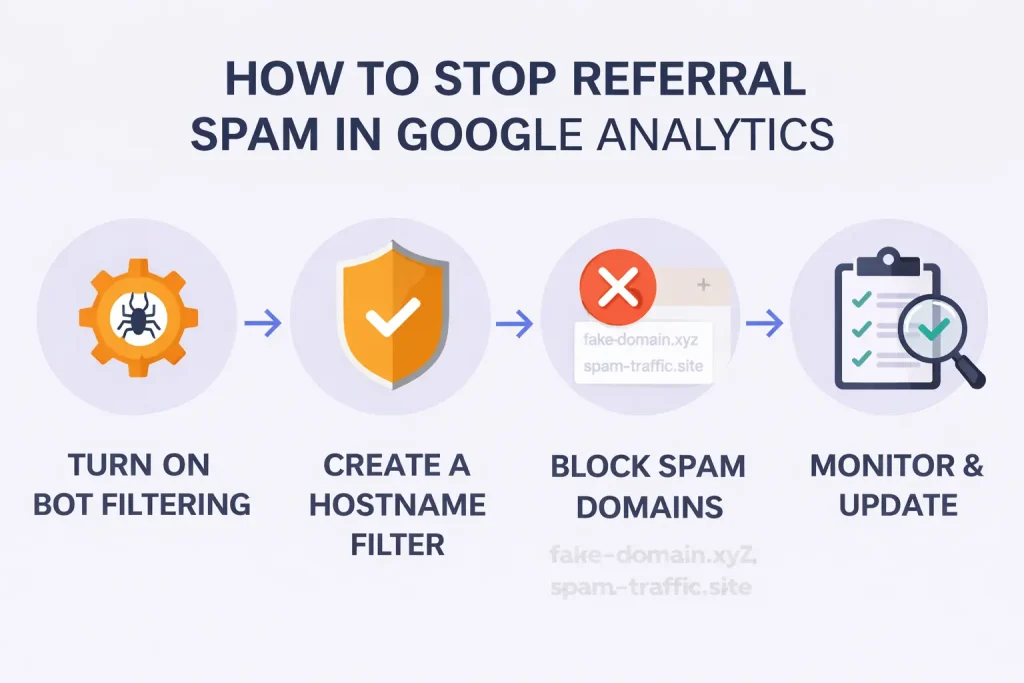
1. Turn On Built-In Bot Filtering
Inside your analytics settings, there is an option to filter out known bots and spiders. Turn this on right away. It will not catch everything, but it is a strong first step.
2. Create A Hostname Filter
This is one of the most important steps.
Only allow traffic that comes from:
- Your domain
- Trusted tools you use
This removes ghost spam completely because those fake visits never touch your real site.
3. Block Known Spam Domains
Go into your referral reports and look for suspicious domains.
Then create filters to exclude them. Over time, this will significantly clean up your data.
4. Use Google Tag Manager For More Control
If you are using Google Tag Manager, you can control when your analytics tag fires.
For example:
- Only trigger analytics when the hostname matches your domain
- Block triggers from unknown sources
This adds another layer of protection.
5. Monitor And Update Regularly
Referral spam is always changing. New domains pop up all the time.
Set a routine:
- Check referral traffic weekly
- Add new exclusions when needed
- Watch for unusual spikes
Clean data is not a one-time fix. It is ongoing.
Real World Example For A Wedding Venue
Let’s say your venue sees a sudden jump of 500 visitors in one day.
At first, that sounds great.
But when you look closer:
- 90 percent of that traffic came from a random domain
- Bounce rate is 100 percent
- No one filled out a form or scheduled a tour
That is not growth. That is referral spam.
Now imagine making a decision based on that data. You might think something is working when it is not.
Once you remove that spam, your real data might show:
- 75 actual visitors
- 5 tour requests
- Strong engagement on your pricing page
That is the data that actually matters.
What Clean Data Should Look Like For A Wedding Venue
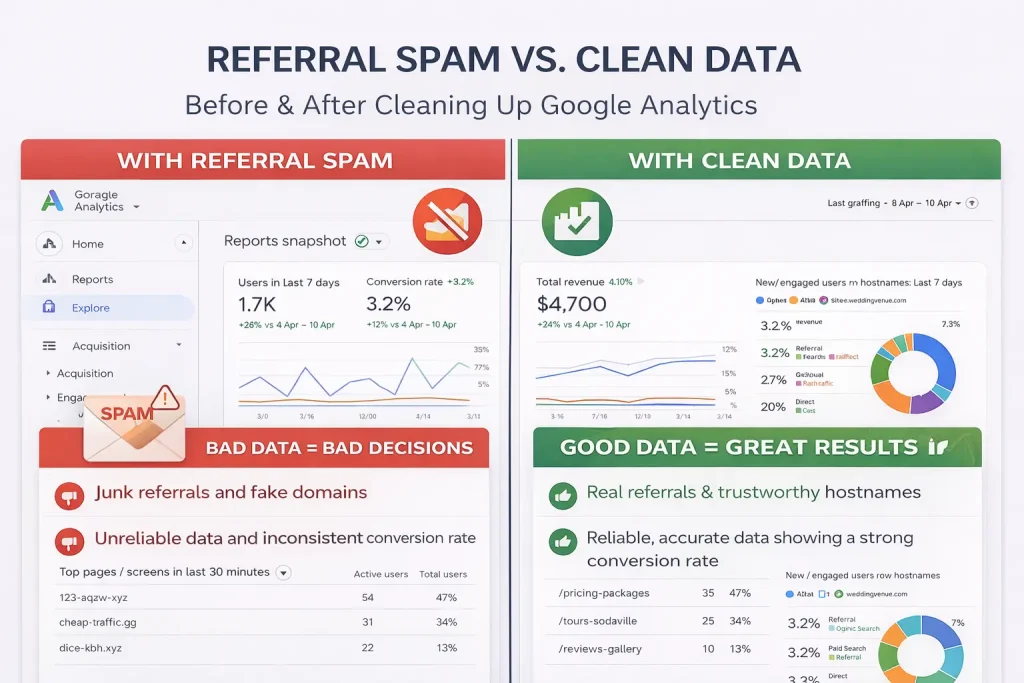
Once you remove referral spam, your analytics becomes much easier to trust.
You should start to see:
- Consistent traffic patterns tied to your marketing
- Realistic bounce rates
- Clear top traffic sources like Google, social media, and vendor links
- Accurate conversion tracking
- Better visibility into what drives tour requests
This is where real growth starts to happen.
What Wedding Venues Should Focus On Instead
Instead of chasing traffic numbers, focus on what actually drives bookings.
Focus On High Intent Traffic
Couples searching for venues in your area are far more valuable than random visitors from unknown sources.
Improve Your Conversion Paths
Make it easy for couples to take the next step:
- Schedule a tour
- Request pricing
- Ask questions
Clear calls to action will always outperform more traffic.
Track Real Engagement Metrics
Stop focusing only on sessions and pageviews.
Instead, look at:
- Time on page
- Scroll depth
- Form submissions
- Clicks on your schedule tour buttons
These metrics tell you what is actually working.
Build A Strong Local SEO Foundation
Your goal should be to rank for:
- Wedding venue near me
- Wedding venues in your city
- Event venues nearby
This brings in people who are ready to book, not random traffic.
FAQ Section: Referral Spam And Wedding Venue Analytics
What causes referral spam in Google Analytics?
Referral spam is caused by automated bots and scripts that are designed to send fake traffic data into your Google Analytics account. These bots either visit your website directly or inject fake visits without ever loading your site at all.
There are two main ways this happens. The first is through real bot traffic, where scripts access your website and trigger analytics tracking just like a real user would. The second is called ghost spam, where fake data is sent straight into your analytics property using your tracking ID, without any actual visit.
The purpose behind referral spam is usually to get you to notice the referring domain and click on it out of curiosity. In other cases, it is used to test vulnerabilities or flood analytics systems with noise.
For wedding venues, this creates a serious issue because your reporting becomes mixed with fake activity. Instead of seeing how real couples interact with your site, you are seeing inflated numbers that do not reflect actual interest or intent.
Does referral spam hurt my SEO rankings?
Referral spam does not directly impact your Google rankings. Search engines do not use your Google Analytics data as a ranking factor, so fake traffic will not push your site up or down in search results on its own.
However, referral spam can indirectly hurt your SEO performance by leading you to make poor decisions based on bad data. For example, if you believe a certain traffic source is performing well when it is actually spam, you might invest time and effort into something that brings no real value.
It can also make your website metrics look worse than they are. High bounce rates and low engagement from spam traffic can hide what real users are doing, making it harder to identify which pages are actually working.
Over time, this lack of clarity can weaken your overall SEO strategy. Instead of improving the pages that drive real tour requests, you may focus on the wrong areas, slowing your growth.
How do I know if my traffic is real?
Real traffic follows natural user behavior, while spam traffic does not. When actual couples visit your wedding venue website, they take time to explore, click through pages, and interact with your content.
You can identify real traffic by looking for patterns like:
- Multiple page views per session
- Time spent reading your pages
- Clicks on important actions like scheduling a tour
- Traffic coming from the local areas you target
Spam traffic usually looks very different. It often shows:
- A bounce rate close to 100 percent
- Session durations of zero seconds
- No conversions or interactions
- Traffic from unrelated countries or unknown domains
Another strong indicator is consistency. Real traffic grows and changes based on your marketing efforts, seasons, and demand. Spam traffic often appears in sudden spikes that do not match anything you are doing.
When you combine these signals, it becomes much easier to separate real users from fake activity.
Can referral spam affect my conversion rate?
Yes, and this is one of the biggest hidden problems for wedding venues. Referral spam can significantly lower your reported conversion rate, even if your website is performing well.
Conversion rate is calculated by dividing the number of conversions by the total number of visitors. When spam traffic increases your visitor count without adding any conversions, your rate drops.
For example, if you have 100 real visitors and 10 of them book a tour, your conversion rate is 10 percent. But if referral spam adds 400 fake visitors with zero conversions, your reported conversion rate drops to 2 percent.
This creates a false impression that your website is underperforming. You might start changing your layout, offers, or messaging when the real issue is simply bad data.
By removing referral spam, you get a true view of how well your website converts, which allows you to make smarter decisions that actually improve bookings.
How often should I check for referral spam?
You should check your analytics for referral spam at least once per week, especially if you are actively running SEO or paid ad campaigns.
Weekly monitoring allows you to:
- Catch new spam domains early
- Identify unusual traffic spikes
- Maintain clean and reliable data
If you notice a sudden increase in traffic that does not align with your marketing activity, it is a good idea to review your referral sources right away.
For wedding venues in competitive markets, clean data is critical. Even small amounts of spam can distort your understanding of what is working.
Over time, you can also build a list of known spam domains and maintain filters that keep your reports accurate. This turns spam management into a simple routine instead of a constant problem.
What is the fastest way to remove referral spam from my reports?
The fastest way to remove referral spam is to create filters that exclude known spam domains and restrict your data to valid hostnames.
Start by identifying suspicious referral sources in your analytics. Then create exclusion filters so those domains no longer appear in your reports moving forward.
Next, apply a hostname filter that only allows traffic from your actual website domain and trusted tools. This step is critical because it removes ghost spam completely.
You can also enable bot filtering in your analytics settings to automatically block known spam bots.
While these steps will not clean past data, they will immediately improve the accuracy of your future reporting. Over time, your analytics will become much more reliable and easier to use.
Can referral spam impact my Google Ads or marketing campaigns?
Yes, referral spam can create confusion when you are analyzing campaign performance, even if it does not directly affect ad delivery.
If your analytics includes spam traffic, you may see:
- Lower conversion rates
- Higher bounce rates
- Misleading traffic sources
This can make it look like your campaigns are underperforming when they are actually doing well.
For example, if you are running ads to drive tour requests, spam traffic can dilute your data and make it harder to measure true return on investment.
By cleaning your analytics, you ensure that your campaign data reflects real users. This allows you to properly evaluate performance, adjust budgets, and scale what is working.
Why is clean analytics data so important for wedding venues?
Clean data is the foundation of every successful marketing decision. Without it, you are guessing instead of making informed choices.
For wedding venues, this is even more important because every lead is high-value. You are not selling a low cost product. You are booking events that can be worth thousands of dollars.
When your analytics is clean, you can clearly see:
- Where your best leads come from
- Which pages drive tour requests
- What content builds trust with couples
- How users move through your site
This clarity allows you to improve your website with confidence. Instead of chasing traffic, you focus on actions that lead to bookings.
In the long run, clean data helps you grow faster, waste less time, and build a stronger marketing system that consistently brings in qualified couples.
Final Thoughts
Referral spam is one of those hidden problems that can quietly throw off your entire marketing strategy. If you do not address it, you are making decisions based on bad data.
For wedding venues, where every inquiry matters, that is a risk you cannot afford to take.
Clean data gives you clarity. Clarity helps you improve your website. And a better website brings in more qualified couples who are ready to book a tour.
If you want a website that is built on clean data and designed to drive real results, Dual Spark Marketing has created a platform that focuses on local SEO structure, built to increase traffic, improve engagement, and generate more tour requests for your venue.
If your wedding venue website is built on bad data, you are making the wrong decisions every single day. Referral spam is just one of the many issues that can quietly kill your results, lower your conversion rates, and waste your time chasing traffic that will never book a tour. Dual Spark Marketing has created a website platform built around local SEO structure that attracts real couples, drives engagement, and turns traffic into tour requests. If you are ready to stop guessing and start dominating your market, reach out today and let us show you exactly how to turn your website into a consistent booking machine.