If you own a wedding venue, your website should do one main job.
Turn visitors into tour requests.
But what happens when couples land on your website and leave without clicking anything?
That is called a bounce.
And if it happens often, your bounce rate goes up.
In this guide, we will explain:
- What bounce rate is
- Why it matters for wedding venues
- What causes high bounce rates
- How to lower your bounce rate
- How better engagement leads to more bookings
Let’s break it down in simple terms.
What Is Bounce Rate?
Bounce rate is the percentage of visitors who land on your website and leave without clicking to another page.
For example:
A couple searches “wedding venue in Tampa.”
They click your website.
They look for a few seconds.
Then they leave without clicking anything else.
That counts as a bounce.
If 100 people visit your website and 60 leave without clicking another page, your bounce rate is 60 percent.
Is Bounce Rate Always Bad?
Not always.
If someone lands on your pricing page, finds the information they need, and then calls you, that still counts as a bounce.
But in most cases, especially for wedding venues, a high bounce rate can mean:
- Visitors are confused
- They did not find what they expected
- The website loaded too slowly
- The content was not helpful
For wedding venues, your website should guide couples through:
- Viewing the gallery
- Reading about packages
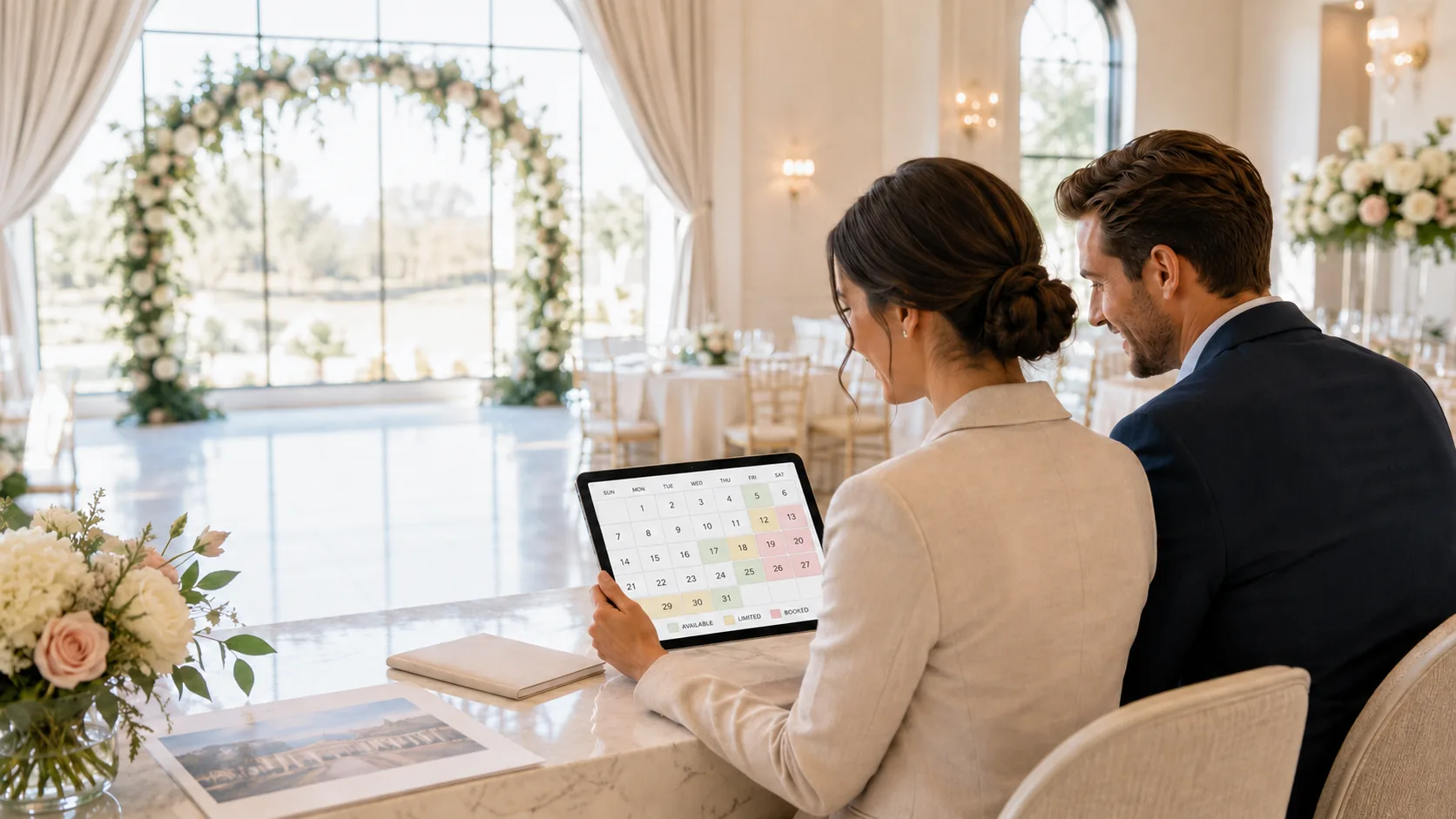
- Checking availability
- Scheduling a tour
If they leave after just one page, that journey never happens.
Why Bounce Rate Matters for Wedding Venues
Wedding planning is emotional and detailed. Couples compare multiple venues before making a decision.
If they land on your site and leave quickly, you lose the chance to:
- Build trust
- Show your value
- Explain your packages
- Capture their contact information
A high bounce rate can also be connected to lower engagement. When visitors do not stay long, it can signal to search engines that your content is not meeting expectations.
Lower bounce rate usually means:
- Better engagement
- More time on site
- More page views
- More conversions
And that leads to more booked weddings.
Common Reasons Wedding Venue Websites Have High Bounce Rates
Let’s look at what often causes couples to leave quickly.
Slow Website Speed
Wedding venues use large photos to show off their property. That is important. But if images are too large, your website can load slowly.
If a page takes more than a few seconds to load, couples may hit the back button.
Fast websites create better first impressions.
No Clear Call to Action
If couples do not know what to do next, they may leave.
Your website should clearly guide visitors with buttons like:
- Schedule a tour
- View pricing
- Check availability
- Download brochure
If there is no clear direction, visitors often exit.
Confusing Navigation
Your menu should be simple and easy to understand.
If couples cannot quickly find:
- Pricing
- Gallery
- Real weddings
- Contact page
They may leave instead of searching.
Lack of Pricing Information
Many couples search with a budget in mind. If they cannot find even basic pricing guidance, they may return to Google and check another venue.
You do not have to list every detail. But giving some transparency builds trust.
Weak Headlines
Your headline should clearly state:
- What type of venue you are
- Where you are located
- What makes you unique
If visitors are confused within the first few seconds, they are more likely to bounce.
Content That Does Not Match Search Intent
If someone searches for “outdoor wedding venue in Orlando” but your page focuses on indoor ballroom space, they may feel misled.
Your content must match what the visitor searched for.
How to Lower Your Bounce Rate
Lowering bounce rate is not about tricks. It is about improving clarity, structure, and user experience. When couples feel confident and guided, they stay longer.
Here are the most effective ways wedding venues can reduce bounce rate.
1. Improve Page Speed
Speed is often the biggest hidden problem on wedding venue websites. High resolution photos are important for showing off your space, but large file sizes can slow your site down significantly. If your homepage takes more than a few seconds to load, many visitors will leave before it even finishes.
To fix this, compress your images before uploading them. Avoid placing heavy video backgrounds at the top of your homepage. Choose reliable hosting that prioritizes performance. Even improving load time by one or two seconds can noticeably lower bounce rate. Fast websites create confidence. Slow websites create frustration.
2. Strengthen Your Above the Fold Section
Above the fold means what visitors see immediately when they land on your site without scrolling. This area determines whether they stay or leave.
Your above the fold section should clearly answer three questions right away:
- What type of venue are you
- Where are you located
- What should they do next
Include a strong headline, a clear supporting sentence, a high quality image, and a visible call to action like “Schedule a Tour” or “View Pricing.” When couples instantly understand they are in the right place, they are much less likely to bounce.
3. Add Clear Navigation
Confusing menus cause quick exits. If couples have to hunt for pricing or your gallery, they may give up and go back to Google.
Your navigation should be simple and predictable. Core pages should be easy to find:
- Home
- Gallery
- Pricing
- About
- Real weddings
- Contact
Avoid overly complex dropdown menus or hidden pages. The goal is to make your website feel intuitive. When visitors can move around your site easily, they explore more pages instead of leaving.

4. Include Helpful Content
Photos alone are not enough. Couples need information to feel comfortable reaching out.
Add detailed content that answers common questions such as:
- How many guests can you host
- What is included in your packages
- What is your rain plan
- What vendors are allowed
- How long couples have access to the venue
The more questions you answer upfront, the longer visitors stay reading. Helpful content reduces uncertainty, and uncertainty is often what causes bounces.
5. Use Internal Linking
Internal links guide visitors to the next step.
For example:
If someone is reading about a real wedding, link them to your gallery page.
If they are viewing pricing, link to your schedule a tour page.
If they are on your homepage, link clearly to both pricing and availability.
Internal linking creates a natural journey through your website. Instead of landing and leaving, couples move from one page to another. That lowers bounce rate and increases engagement.
6. Add Social Proof
Trust keeps people on your website. Without trust, visitors leave quickly.
Include:
- Reviews from past couples
- Testimonials
- Awards
- Vendor partnerships
- Real wedding features
When couples see that others had a great experience at your venue, they feel more confident. That confidence encourages them to keep exploring rather than returning to search results.
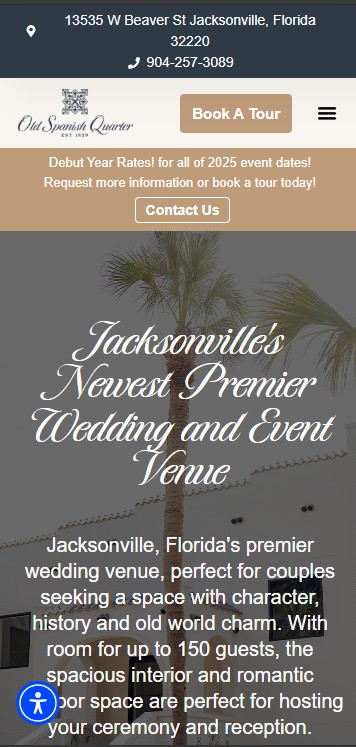
7. Make Your Site Mobile Friendly
Many couples search for venues on their phones. If your site is hard to use on mobile, bounce rate will rise quickly.
Check your website on different devices. Make sure:
- Text is easy to read
- Buttons are large enough to tap
- Images resize properly
- Forms are simple to complete
A smooth mobile experience keeps visitors engaged. A frustrating mobile layout sends them away.
8. Match Search Intent Clearly
One of the biggest causes of bounce rate is mismatch between what someone searched for and what they see.
If a couple searches for “outdoor wedding venue in Tampa,” your page should clearly show outdoor ceremony photos and explain your outdoor space.
If the page feels generic or focused on something else, they may feel misled and leave. Make sure every page clearly matches the keyword it targets. When expectations are met immediately, bounce rate drops.
The Key Takeaway
Reducing bounce rate is really about removing confusion and friction.
When your website is:
- Fast
- Clear
- Helpful
- Easy to navigate
- Trustworthy
Couples stay longer.
And when they stay longer, they are far more likely to schedule a tour.
Lower bounce rate is not just an SEO improvement.
It is a booking improvement.
Final Thoughts
Bounce rate is not just a number in your analytics dashboard. It is a sign of how couples experience your website the moment they land on it. When your site is clear, fast, and built to guide visitors naturally toward scheduling a tour, engagement improves and inquiries increase. That is why having the right structure behind your website matters.
At Dual Spark Marketing, we build wedding venue websites designed specifically to reduce friction, improve user experience, and turn traffic into real tour requests. When your site is built with both SEO and conversions in mind, you do not just get visitors — you get booked dates.